web analytics

I love 8-bit® in Kouvola city library 2025

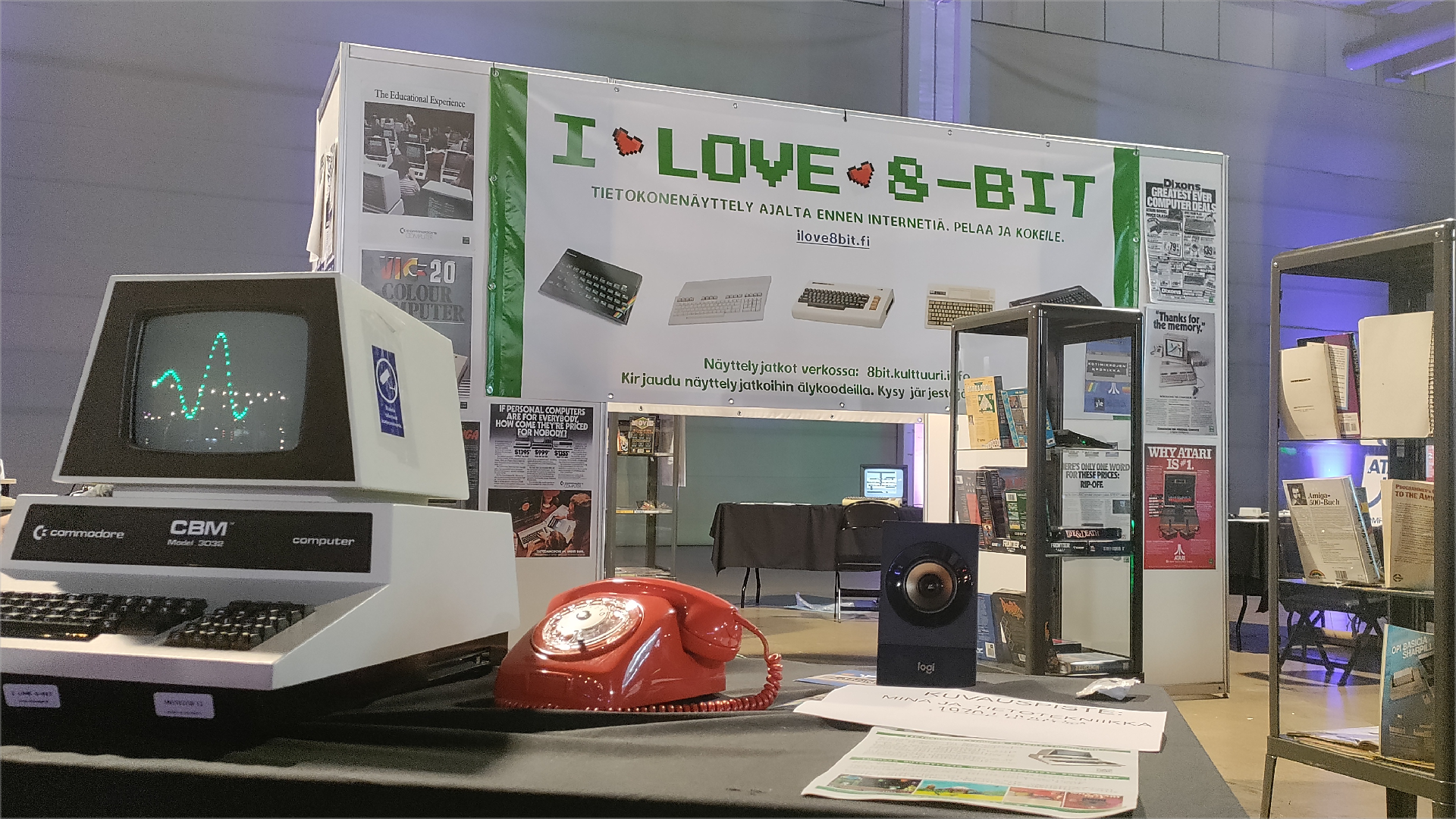
In November 2025, the “I Love 8-bit” exhibition arrived on loan at the Kouvola City Library, bringing a piece of digital cultural history into the heart of the library environment. The two-week loan period offered library patrons a unique opportunity to explore retro games and early computers in a way that differed from the traditional library experience.

The exhibition featured all the crowd favorites: classic retro games, iconic 8-bit computers, and the chance to try out the equipment firsthand. This made the exhibition particularly appealing both to older visitors, who were revisiting the games of their youth, and to younger visitors, for whom the experience offered a new perspective on the evolution of technology. For the library, the exhibition was also a significant success in terms of visitor numbers. It attracted new customer groups, particularly people interested in gaming and technology who had not necessarily used the library’s services before. The exhibition demonstrated that the library can serve as a versatile cultural space that combines elements of knowledge, entertainment, and community. For two weeks, “I Love 8-bit” brought computer culture into the library’s daily routine and enriched its activities in a new way. It not only showcased technology from the past but also reinforced the library’s role as a contemporary and engaging meeting place.

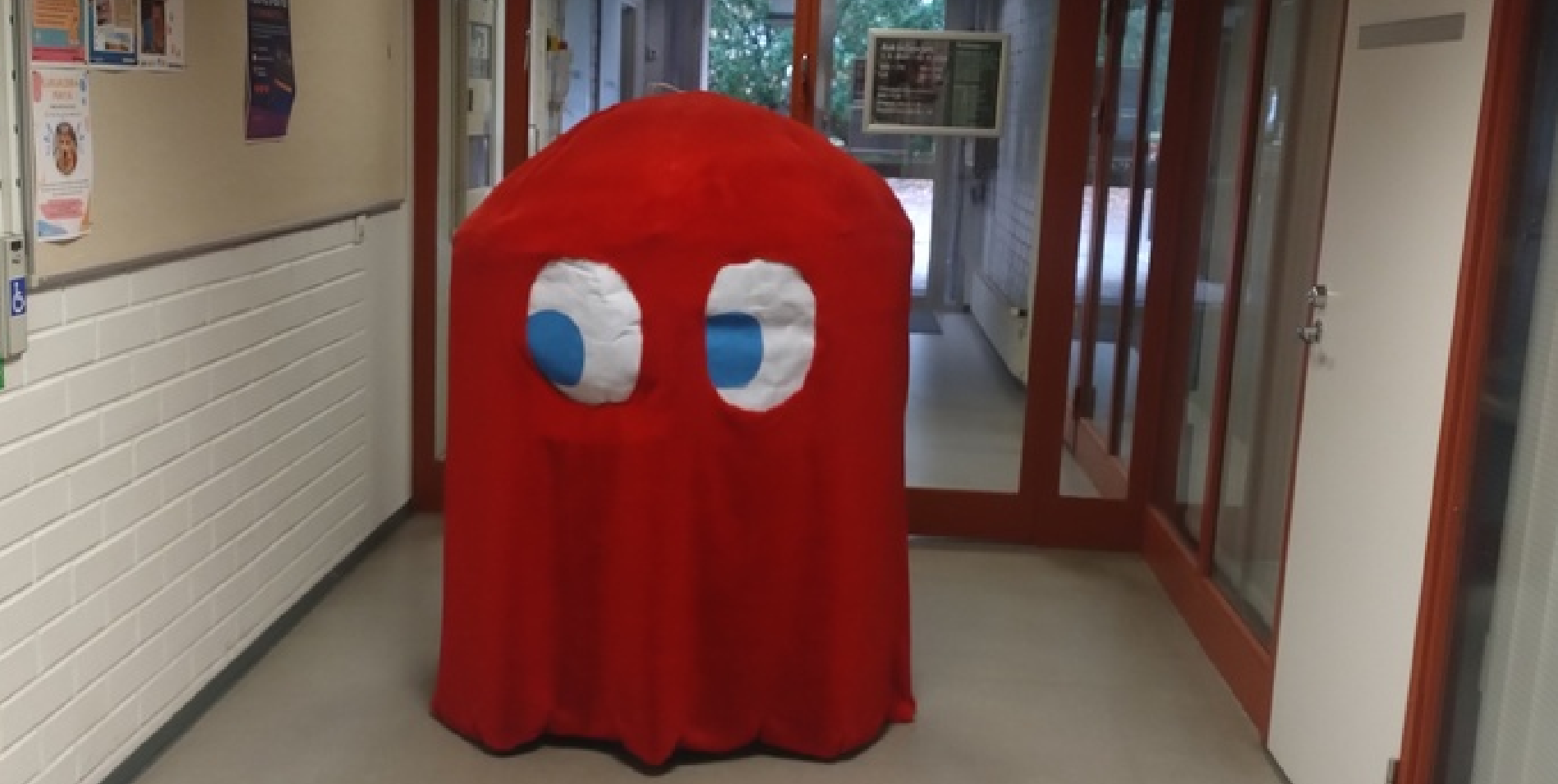
Örff, the hilarious game character from 1980’s that escaped from a computer game to the present day,  also visited Kouvola to entertain guests on November 8, 2025!


Return of the legend: The Atari ST Studio

A pioneer in digital music production

The Atari ST occupies a unique and often under-appreciated place in the history of digital music production. Released in the mid-1980s, the machine was not marketed primarily as a musical instrument, yet it became one of the most influential tools in the early era of computer-based studios. Its cultural and technical significance lies largely in one deceptively simple feature: built-in MIDI ports. At a time when most personal computers required expensive add-on hardware to communicate with synthesizers and drum machines, the Atari ST offered musicians a direct, reliable bridge between digital sequencing and hardware sound generation. This integration made the ST an unexpectedly powerful studio hub. Software such as Steinberg’s Pro 24 and later Cubase, as well as C-Lab’s Notator, transformed the computer into a sophisticated sequencer capable of precise timing and flexible arrangement. The machine’s operating system, while minimal, allowed developers to focus on performance rather than interface complexity. As a result, the Atari ST achieved a level of MIDI timing stability that even decades later is remembered with a kind of reverence by electronic musicians.

The impact of this technology reached far beyond professional studios. Because the ST was relatively affordable, it democratized access to digital music production. Home musicians could experiment with multitrack sequencing, program intricate rhythmic patterns, and synchronize multiple synthesizers—tasks previously restricted to specialized studios. This shift contributed to the rise of bedroom producers and played a silent yet crucial role in the expansion of genres such as electronic dance music, techno, and early computer-aided pop production. In retrospect, the Atari ST can be seen as a bridge between analog hardware workflows and the software-dominated environments that define music creation today. Its MIDI-centered design anticipated the modern digital audio workstation, where sequencing, timing, and instrument control exist within a single computational space. Though the machine itself has long since become a relic, its influence persists in the workflows, expectations, and creative possibilities that shape contemporary music production. The Atari ST was not just a computer; it was a catalyst for the digital musical imagination.

The Atari ST is often celebrated as a pivotal tool in the evolution of computer-based music production. Central to its success were the software programs that took full advantage of the system’s built-in MIDI ports. Among the most influential were Steinberg’s Cubase, C-Lab’s Notator, and MROS/MR T (MIDI Real-Time Operating System), each offering unique features that shaped the way musicians created and controlled music during the late 1980s and early 1990s. Cubase, introduced by Steinberg in 1989, quickly became one of the most popular music production tools for the Atari ST. Its graphical user interface (GUI) marked a major advancement in MIDI sequencing, allowing musicians to visually edit their compositions in ways that were previously not possible. The Arrange Window made it easy to drag and drop musical sections, while the Key Editor, Score Editor, and Drum Editor gave users fine-grained control over individual notes and rhythms. Cubase was especially revered for its timing stability, a hallmark of the Atari ST’s hardware. This reliability, combined with its sophisticated yet user-friendly design, made Cubase an industry standard for electronic musicians, composers, and producers.

Atari Midi Music Setup available on The Computer Museum of Kallio in Helsinki!

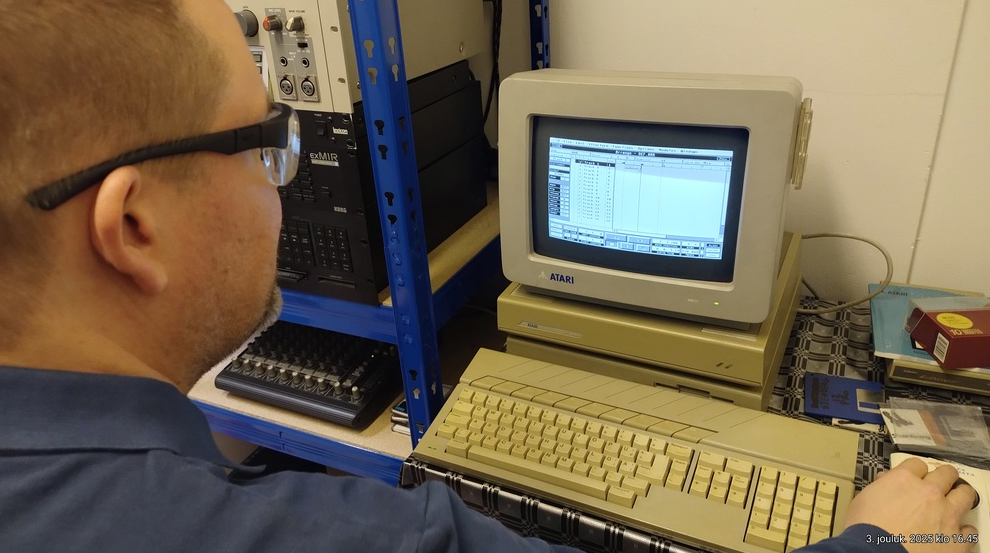
Jani is pimping up a studio at the museum’s club room in Helsinki

Alongside Cubase, C-Lab’s Notator became a major contender in the world of professional MIDI sequencing on the Atari ST. Initially launched in 1986, Notator was a deeply powerful program with an intuitive and flexible interface, specifically designed to allow musicians to work quickly and precisely. Notator’s focus was on high-level music composition, offering advanced features such as polyphonic step input, automation of MIDI parameters, and detailed MIDI editing capabilities. Its score-based system appealed to musicians from classical and film scoring backgrounds, while its ability to handle complex compositions made it a go-to tool for professional studios. As Notator evolved into Notator SL, it continued to improve in terms of usability, adding more advanced MIDI functions, but always retaining its core principle of precise musical control. The backbone of many of C-Lab’s programs, including Notator, was MROS (MIDI Real-Time Operating System), also known as MR T. MROS allowed the Atari ST to manage multiple MIDI tasks simultaneously, a revolutionary feature at the time. Unlike traditional operating systems, which could struggle to handle complex, time-sensitive MIDI data, MROS provided a real-time environment that ensured tight synchronization between software and external hardware. For musicians, this meant that the Atari ST could act as a seamless control hub, running multiple music programs or sequencers in parallel without sacrificing performance or timing accuracy. The ability to route MIDI data through various applications in real-time was one of the reasons that the Atari ST became the go-to machine for advanced MIDI setups in the 1980s and 1990s.

Together, Cubase, Notator, and MROS/MR T transformed the Atari ST from a basic home computer into a powerful music production tool. These programs not only provided musicians with a robust digital studio environment but also helped to define the workflows and processes of digital music production that continue to influence modern DAWs (Digital Audio Workstations) today. Whether through Cubase’s iconic sequencing power, Notator’s classical music focus, or MROS’s real-time MIDI handling, these applications established the Atari ST as a cornerstone of digital music creation, leaving a lasting legacy in the world of electronic music and beyond.

Atari Midi Music Setup available on The Computer Museum of Kallio in Helsinki

The Computer Museum of Kallio in Helsinki offers a fascinating glimpse into the evolution of digital technology, and one of its most remarkable exhibits is the Atari MIDI Studio. This retro music setup, which centers around an Atari Mega ST4, is not just a museum piece, but a living, interactive experience that allows visitors to step back in time and create music using cutting-edge technology from the late 1980s and early 1990s. The museum’s Atari MIDI studio is truly a rare gem, especially when considering the scarcity of working setups like this in the world today.

The Computer Museum of Kallio in Helsinki

At the heart of the studio is the Atari Mega ST4, a powerful personal computer that was designed with musicians in mind. Released in the late 1980s, the Mega ST4 features integrated MIDI ports, allowing it to connect seamlessly to external synthesizers and samplers. This was a game-changer at the time, as it eliminated the need for expensive add-ons, making MIDI sequencing more accessible to both amateur and professional musicians. The studio is equipped with a selection of iconic music gear that, when combined with the Atari, offers a full-fledged music production experience. Among the most notable pieces is the Akai S1000 sampler, a legendary machine that allowed musicians to record and manipulate audio samples, creating everything from drum hits to complex soundscapes. The Korg M1R synthesizer, known for its rich sounds and versatility, is another key component. With its iconic sounds used in everything from pop hits to film scores, the M1R has earned a place in music history. Additionally, the Yamaha TG77 synthesizer adds further depth, offering an advanced combination of synthesis and sampling capabilities, which was highly regarded for its complex and evolving sound textures.

What makes the Atari MIDI Studio at The Computer Museum of Kallio particularly special is the ability for visitors to interact with the setup, creating their own music using the very same tools that shaped an era of electronic music production. Cubase, the industry-standard MIDI sequencer, is installed on the Atari ST, allowing users to experiment with sequencing, arranging, and editing music. This environment offers a hands-on experience of how early digital music was created, with all the quirks and limitations that come with vintage gear. Visitors can explore the way MIDI was used to control synthesizers, samplers, and drum machines in ways that were groundbreaking at the time.
In a world dominated by modern digital audio workstations (DAWs) and software-based production, the Atari MIDI Studio at The Computer Museum of Kallio offers a rare opportunity to experience the tools that laid the foundation for today’s music production techniques. The studio is not only a tribute to the history of electronic music but a functional space where visitors can create and experiment in a way that few can ever experience in a museum setting. For music enthusiasts, collectors, and anyone with an interest in the technological evolution of music, this setup is a must-see. It stands as a true rarity in the world, offering a direct connection to the past and a chance to witness how the magic of music was made during a transformative time in digital music history.

Further information about The Computer Museum of Kallio: www.kalliontietokonemuseo.fi/en/

The Atari ST music studio in operation at The Computer Museum of Kallio in Helsinki (2025)

The legacy of computer culture

The Golden Age of Home Computers:
Exploring the computer culture


The 1980s was the revolutionary period in the history of personal computer technology.  It was a golden age of home computing that changed how people interacted with machines forever. Long before sleek smartphones or high-speed fiber internet, the 1980s home computer era was defined by a sense of wonder, creativity, and exploration. It was a time when teenagers programmed games in their bedrooms, magazines published lines of code for readers to type in manually, and digital culture was just beginning to take shape.

At the heart of this burgeoning computer culture were a series of iconic machines—names like Commodore, Atari, Sinclair, Amstrad, Amiga, and Apple II—which not only democratized access to computing but also helped define the cultural identity of a generation.

Commodore: The People’s Computer

No conversation about 1980s home computing is complete without the Commodore 64. Released in 1982, the C64 would go on to become the best-selling single personal computer model of all time. With its distinctive beige casing, built-in BASIC interpreter, and SID (Sound Interface Device) chip capable of advanced sound synthesis, the C64 captured the imagination of millions.

It wasn’t just a tool for word processing or spreadsheets—it was a gateway to gaming, music, and programming. Kids would spend hours learning to code in BASIC or playing groundbreaking games like Impossible Mission, Summer Games, and The Bard’s Tale. The C64’s robust hardware also made it a favorite among demoscene communities, who pushed the machine to its limits with intricate visual and audio productions.

Before the C64, Commodore had already entered the home market with the VIC-20, marketed as a low-cost computer for the masses. But it was the C64’s balance of affordability, power, and support from game developers that cemented Commodore’s legacy. The Commodore 64 achieved a position that no other manufacturer had surpassed before the advent of the PC era in the early 1990s. The Commodore 64 is a standard fixture at the I love 8-bit® exhibitions organised by The Computer Museum of Kallio and has been very popular wherever the I love 8-bit® exhibitions have been held.


Atari: From Arcades to Living Rooms

While Atari was initially famous for its arcade hits like Pong and Asteroids, the company made a significant mark on the home computer scene with its Atari 8-bit family, starting with the Atari 400 and 800 in 1979 and continuing into the 1980s.

The Atari 800, with its advanced graphics and sound capabilities, stood out in an era when many home computers struggled to produce anything more sophisticated than beeps and blocky sprites. Its custom chipset and modular design appealed to enthusiasts and hobbyists alike.

Later in the decade, Atari launched the Atari ST, a 16-bit machine that competed directly with the Commodore Amiga. The ST gained a loyal following in music production circles due to its built-in MIDI ports—a unique feature that allowed musicians to connect synthesizers and sequencers directly to the computer, making it a favorite in studios well into the 1990s.


Amiga: Multimedia Before Its Time

Developed by a breakaway team of engineers initially working on a gaming console, the Commodore Amiga was introduced in 1985 as a high-performance home computer that would revolutionize multimedia computing.

The Amiga 1000, and later models like the Amiga 500 and 1200, offered features far ahead of their time: multitasking operating systems, dedicated co-processors for graphics and sound, and a vibrant graphical user interface. It was a machine beloved by gamers, graphic artists, video editors, and musicians alike.

Games like Shadow of the Beast, Lemmings, and The Secret of Monkey Island showcased the Amiga’s technical prowess. Meanwhile, the demoscene—a subculture of programmers and digital artists—used the platform to produce breathtaking audiovisual demonstrations that rivaled commercial releases.

Despite its innovative hardware, Commodore’s marketing missteps and corporate mismanagement eventually led to the Amiga’s decline. Yet its legacy endures, particularly among retro computing enthusiasts.


Sinclair: Britain’s Budget Computing Hero

In the UK, Clive Sinclair became a national hero with the launch of the ZX Spectrum in 1982. With its rubber keyboard and minimalist design, the Spectrum may have looked like a toy, but it packed a powerful punch in a very affordable package.

Thanks to its low cost, the ZX Spectrum became the first computer for many British households and inspired an entire generation of bedroom coders. Developers and hobbyists used Sinclair’s accessible BASIC language to create thousands of games and programs, fueling a homegrown software industry.

Titles like Manic Miner, Jet Set Willy, and Elite helped define the British gaming scene of the 1980s. Meanwhile, young developers like the Darling brothers, who later founded Codemasters, cut their teeth on the Spectrum.

Sinclair’s earlier ZX80 and ZX81 models were also significant, albeit more limited. They were sold as kits or low-cost assembled units, making home computing possible on a shoestring budget.


Amstrad: Making Business and Play Affordable

Founded by Alan Sugar, Amstrad entered the computer market in the mid-1980s with the CPC (Colour Personal Computer) series, starting with the CPC 464. Unlike its competitors, the CPC came as a complete package: computer, keyboard, cassette deck, and monitor—all in one box.

Amstrad positioned itself as a more reliable and professional-looking alternative to Sinclair, while remaining within reach of the average consumer. The CPC line gained popularity in both homes and schools, especially in France, Spain, and the UK.

Amstrad would later release the PCW series, aimed at word processing and small business users, and eventually enter the IBM-compatible PC market. While its presence in gaming wasn’t as dominant as Commodore or Sinclair, the CPC had its share of great titles and a dedicated fan base.


Apple II: The American Pioneer

Across the Atlantic, Apple had already started the personal computing revolution with the Apple II, first released in 1977 but hitting its stride in the early 1980s. With its plastic casing, full-sized keyboard, and expandability, the Apple II set a standard that many competitors would follow.

The Apple II became a staple in American schools thanks to educational software like Oregon Trail and Number Munchers, while also attracting business users with spreadsheet programs like VisiCalc. Its relatively high price meant it wasn’t as widely adopted by European home users, but its influence was global nonetheless.

What made the Apple II stand out was its combination of accessibility and power, along with a strong ecosystem of third-party developers. It laid the groundwork for Apple’s later successes and helped establish the company’s reputation for quality and innovation.


The Birth of Digital Subcultures

Beyond the machines themselves, the 1980s home computing era gave rise to vibrant communities and subcultures. Magazines like Compute!, BYTE, Zzap!64, and Crash were essential reading, offering reviews, programming tips, and pages of type-in code.

Bulletin board systems (BBSes) allowed computer users to connect over phone lines, exchanging messages, software, and information long before the World Wide Web. Early hacker culture and software piracy also emerged during this time, often accompanied by hand-drawn ASCII art and signature “cracktros” added to pirated games.

For many, these early experiences with computers weren’t just a hobby—they were life-changing introductions to logic, problem-solving, and creative expression.


Legacy and Nostalgia

Today, the legacy of 1980s home computers is visible everywhere—from indie game developers inspired by 8-bit aesthetics to engineers who got their start writing code on a C64 or ZX Spectrum. Emulators allow modern users to revisit these classic systems, while a thriving retro computing community preserves and restores the original hardware.

There’s a growing appreciation for the tactile, analog charm of cassette loading screens, joystick clacks, and CRT fuzz. These machines may seem primitive by modern standards, but they represent a time when computing was personal, experimental, and excitingly unpredictable.


From Finland with Love:

The Computer Museum of Kallio brings back the computer culture to the future!

One of the most dedicated institutions preserving this legacy is  The Computer Museum of Kallio in Finland. This grassroots organization celebrates the history of 8-bit and 16-bit home computers through hands-on exhibits and educational programs. Their internationally acclaimed I Love 8-bit exhibition showcases a curated selection of vintage computers, games, and artifacts—available for touring installations around the world by request. Whether you’re an original user or a curious newcomer, the world of 1980s home computing offers a fascinating glimpse into a formative era of digital culture—an era where every beep, every blocky sprite, and every line of code felt like a step into the future.

The Computer Museum of Kallio is a private instituion

Tucked away in the vibrant and bohemian Kallio district of Helsinki, the The Computer Museum of Kallio is a unique, privately run institution that has steadily gained a cult following among retro computing fans and international visitors alike. Despite its modest size and grassroots origin, this museum now finds itself standing shoulder to shoulder with some of the most prestigious computer museums in the world, based on visitor reviews and curated experiences.

While most major computer museums are large, government-funded institutions with vast collections and sweeping narratives of computing history,The Computer Museum of Kallio takes a different, more intimate approach. Its entire design evokes the feeling of stepping into a 1980s home computer store. Shelves are stacked with pristine models of Commodore 64, Amiga 500, Atari ST, Sinclair ZX Spectrum, Amstrad CPC, and Apple II computers—each fully functional and often displayed in their original packaging. Visitors are encouraged not only to look but to touch, play, and rediscover the charm of these legendary machines.

What sets Kallio apart isn’t just its collection but its emotional curation. Rather than focusing solely on technological milestones or corporate timelines, the museum showcases the cultural side of computing—what it felt like to code your first BASIC program at home, play pixelated games on cassette tapes, or marvel at glowing green command lines. The experience is tactile, nostalgic, and distinctly personal.

A Global Comparison Success

When compared to global peers, Kallio holds its own impressively. The Computer History Museum in Mountain View, California, is widely considered the gold standard in scale and archival depth. With thousands of artifacts and exhibits that span centuries—from ancient abacuses to cloud computing—it offers an unparalleled academic dive into the evolution of computing. In Europe, Germany’s Heinz Nixdorf MuseumsForum stands as the largest computer museum in the world, combining historical artifacts with futuristic displays in a sprawling, interactive space. Meanwhile, the Centre for Computing History in Cambridge, UK, is beloved for its hands-on retro game consoles and educational programming.

And yet, despite their size and funding, these institutions often score lower on visitor satisfaction. According to recent Google review averages (with a minimum of 15 reviews per museum), The Computer Museum of Kallio ranks among the top three computer museums globally, tied with Kyiv’s Software and Computer Museum, both earning an impressive 4.9 out of 5 stars. That’s higher than the ratings of much larger institutions such as Bletchley Park’s National Museum of Computing, which holds a 4.6 average, and Cambridge’s Centre for Computing History


The evaluation of The Computer Museum of Kallio and how it compares to other computer museums is taken directly from the ChatGPT AI. The AI was asked to write an article “Write an article about the Kallio Computer Museum and how it compares to other computer museums.”

The fateful moments of Commodore and Atari

© 2025 I love 8-bit® -publications


What happened to Commodore and Atari?

The 1970s and 1980s were a boom time for the microcomputer market. New devices and manufacturers with their own personal solutions appeared for consumers to purchase to solve their home computing needs. Spectravideo, Sinclair, Dragon, Oric, Amstrad, Texas Instruments. Acorn… all these were familiar names alongside Atari and Commodore. Perhaps one of these might even have been an option when considering that first computer for the home. But then computer manufacturers started to disappear from the market, but a few like Commodore, Acorn, Atari and Amstrad survived until the 1990s. The course of developments can be easily followed in Mikrobit 1/1984, 4/1984 and 12/1985, for example, which featured computers on the market. Reading the articles, you can see how the great harvester had gone about picking off the unlucky hardware manufacturers and their products from the market.

Commodore and Atari were big players in the computer boom of the 1970s and 1980s. But why then did these manufacturers disappear from the market, what happened? Why the both companies failed to survive as future alternatives, even though both manufacturers had advanced products in the mid-1980s at a fraction of the price of PCs?

Own products, own technologies

Commodore’s success story with microcomputers began with the PET computer in 1977, and Atari’s success was also based on the 8-bit successes of the 1970s. Both success stories came to an end in the early 1990s as the computer market consolidated around PCs and, to a lesser extent, Apple’s Macintosh. It is fair to say that many Commodore and Atari fans found this development hard going. They had to replace the computer, software and technology of a familiar manufacturer with a PC. More than a decade might have passed with the familiar Commodore or Atari computers, but then the manufacturers and technologies simply disappeared from the market.

Commodore and Atari were microcomputer manufacturers with their own technology and architecture. The companies marketed and sold the computers they developed themselves and had exclusive control over the manufacture of their computer models. It was also profitable for a while. The market dominance of the Commodore 64 suggested that Commodore would continue to be a powerhouse in its field in the future. This perception was confirmed in 1985 with the introduction of the advanced features of the Commodore Amiga. In addition, the smooth running operating system of Amiga’s competitor, the Atari ST, combined with the machine’s ability to produce music and publications, made other computer manufacturers look old-fashioned and expensive. This easily gave the impression of Commodore and Atari’s progressiveness and technological superiority over much more expensive PCs. An Olivetti PC in a high school classroom in the 1980s, with MS-DOS and four-colour CGA graphics, failed to impress after Amiga and Atari ST.

Coincidence created the mainstream technology platform accidentally

The biggest misfortune and fateful moment for home microprocessors was the formation of the accident platform of their time in 1981, when IBM launched the PC it had developed. At the time of its release, the IBM PC was just one productised computer model among others. Viewed as a single-manufacturer product, the IBM PC was not a technological pioneer in the same way as Apple’s Macintosh, released in 1984, or the Atari ST and Commodore Amiga, released in 1985. But thanks to IBM’s design flaw, the IBM PC opened the market to consolidation in the computer market. As a result, the IBM PC made it possible for virtually anyone with sufficient resources to manufacture, sell and market IBM PC-compatible computers. This set in motion a chain of events that sealed the fate of Atari and Commodore computers.
Manufacturing methods as innovation

Manufacturing methods as innovation

Thanks to a mass-producible and easily exploitable architecture, a volume market for PC-compatible computer components and their assembly gradually developed. This triggered a spiral that drove down the unit price of the parts needed for manufacturing, and hence the unit price of PCs. As a result, the PC was soon a home alternative to the Commodore Amiga and Atari ST. Price competition and manufacturing volumes turned to PC-compatible computers with hundreds of hardware manufacturers, the largest of which still dominate the PC market. Many new companies became involved in the development of peripherals for PCs. Manufacturers of peripherals began to offer more powerful graphics cards, better sound cards and larger mass storage devices.

For the consumer, this was a good thing, even if it meant that the equipment got old in a couple of years. In the PC-based ecosystem, you didn’t have to give up the old to get something new. As a result, a number of companies specializing in the development of PC technology emerged. These were able to bring new features to PCs that did not depend on a single computer manufacturer. In this way, value chains began to form around PC technology, allowing PC manufacturers to focus only on the most efficient assembly and distribution by selecting suitable components from the market for their devices. Technological development took place away from the manufacturer. Manufacturers did not have to take responsibility for the development of the operating system or even the components of the PCs they produced. It was enough for the manufacturer to focus on the most efficient distribution and marketing on an industrial scale. This was a process that gave birth to an entire industry.

As a result, the threshold to become a computer manufacturer was low. Getting started was a matter of selecting the most suitable components, acquiring manufacturing capacity on the production line and licensing a compatible MS-DOS operating system. As a result, a value-chain PC ecosystem emerged, the volume of which could not compete with that of low-end domestic PC manufacturers.

A Commodore or Atari product was what it was when you bought it, but a PC wasn’t necessarily.

It was easy to replace an ageing PC with a new PC or extend its life with new parts. From the user’s point of view, the PC’s life cycle continued and the software continued to work, even when the equipment was replaced by new and different PCs from different manufacturers. Atari and Commodore as companies were able to create many great individual products, but these companies were doomed to their own product-centric model, which did not allow the new industry to support their operations, which the PCs correspondingly benefited from. Commodore and Atari, the companies specialising in home computers, were the product companies responsible for the technology of the computers they made and sold. This model became obsolete for these companies in no time, as the PC did not allow a similar ecosystem of computer and component manufacturers to emerge.

The best products from technical point of view aren’t necessarily the winners in marketing economy. The best distribution wins.

Looking at the experience that the Olivet PC provided in a high school classroom in 1988, there was nothing to suggest that the PC was a viable product for home use. The price was completely out of reach, the graphics were lousy and the soundscape was bleepy. The great Dungeon Master from the Atari ST or the great demos from Amiga came to mind. There were clearly better products at home, or so it was believed. So why on earth would anyone buy a PC at home? It was a perfectly legitimate question between 1985 and 1990. This was all much cheaper on top of all the other good stuff, because in the computer market, price was a major factor in consumers’ purchasing decisions.
The low purchase price of home computers initially helped their manufacturers to achieve high volumes in the consumer market before the consolidation into PCs took place. In business use, the low purchase price of domestic PCs became irrelevant if the purchased product did not deliver the desired productivity. In the case of PCs, this means, for example, software, availability of accessories, support services, skilled staff, and organised distribution, manufacturing and continuity of the technology. And if any one of these things can deliver measurable productivity in business use, the importance of cheap purchase price can be ignored. This created a whole new industry for companies supplying PC technology, but Commodore and Atari, despite their advanced products, were unable to keep up with this development.

The creation of an ecosystem for Commodore and Atari would have created value for these companies by reducing the resources needed for development, creating demand for new distributors and lowering the unit cost of equipment manufacturing. The absence of this meant that large-scale industrial-scale IT companies could not create an ecosystem for manufacturing and distribution based on Atari or Amiga, as was the case on the PC side. Whereas the PC is a generic technology platform, Commodore and Atari as product companies were not. As a result of genericity, manufacturers had a low threshold to produce PCs and components on an industrial scale, but Commodore and Atari did not have this advantage. Instead of generic technology, Commodore had its own unique Amiga to offer and Atari had its own ST/TT/Falcon product family, of which Falcon in particular was a top product, but too niche to succeed in the volume market.

In total, around ten million Amiga and Atari ST series computers were sold over a ten-year period (1985-1995). By comparison, in 2024, around 700 000 PCs will be sold per day. Of course, daily PC sales figures were lower in the 1980s and 1990s. The reason for the large numbers of units is that there have been many manufacturers and distributors of PC technology, thanks to its consolidated operating model.

Only one product manufacturer survived the upheaval… With little help by Microsoft.

Why then did Apple’s computers survive the consolidation of the computer market, but Commodore and Atari did not? Apple’s business is also based on the same idea as Commodore and Atari. In that model, the computer and its technology is a product designed by its manufacturer and bought by the customer. Apple did try to get more volume from the market for its products by licensing the Apple II model to other manufacturers. Apple managed to get enough volume for its computers in the cash-rich corporate market, where there was a sufficient user base for Apple products. Naturally, what matters to computer manufacturers and their resellers is the profit margin on their equipment. Apple had this aspect right, but low margin manufacturers such as Atari and Commodore did not. You had to sell quite a lot of Amigas and Atari in order to get the same margin as a single Macintosh.

Comparing Commodore and Atari to Apple, the latter has been able to provide global success opportunities for software manufacturers. Commodore and Atari didn’t have that to offer software companies, although they did have some great software, such as Calamus, Notator and Cubase on the Atari ST and Amiga’s Deluxe Paint. Compared to the Commodore, the Atari did manage to some extent to provide opportunities for software companies to succeed, as software for music creation developed for the Atari has been ported to other platforms as well. But otherwise, the Atari and Commodore computers as technology platforms did not provide the kind of success stories for software companies that the PC and Apple did.

A more lucrative and diversified business market enabled service ecosystems around technology, but a low-margin, piracy-ridden consumer market focused on games and low-cost computers did not. The corporate market was left out of the reach of Atari and Commodore as the market became more concentrated, although Apple had a share of this market but not without the support of Microsoft. As hardware manufacturing and sales volumes also turned as PC prices fell within the reach of ordinary consumers, there was too little scope for low-volume specialist models such as Commodore and Atari. The only way to survive would have been to expand the product range and open the door to the emergence of new value chains – if done in time, of course. As if mobile phones had ever seen a similar development.

“Why Commodore and Atari disappeared from the computer market”, is part of the I love 8-bit® products. The I love 8-bit® contains travellng computer exhibitions, the museum in Helsinki, computer magazines, and series of articles that researches, publishes and presents information about the events of its era. This article has also been published in SAKU, it is the Amiga user magazine (December issue 2024). The article is written by Tuomo Ryynänen. 

These disappeared historical computer devices and culture can be seen and test at the Computer Museum of Kallio that provides the  I love 8-bit® exhibition in the venue.

I love 8-bit® in Helsinki 2022

In early 2022, the Museum of Technology organized an exhibition titled I love 8-bit, which ran from February 16 to April 3, 2022. The exhibition offered visitors a nostalgic yet educational look at the world of 8-bit technology—a time when computers and video games were simpler but laid the foundation for today’s digital culture. The exhibition focused on early video games, home computers, and gaming culture, which evoked memories of childhood and youth for many visitors. At the same time, the exhibition offered younger generations the opportunity to learn about the origins of today’s technology. Interactivity was a key part of the experience: visitors were able to try out the games themselves, making the experience engaging and accessible. The exhibition proved to be extremely popular. During its run, the museum welcomed over 3,600 visitors, which speaks to the topic’s appeal and the exhibition’s successful execution. Thanks to its popularity, I love 8-bit did not remain just a local event but went on to tour across Finland. The traveling exhibition has since visited various locations 35 times, which is a significant achievement and a testament to its broad appeal. One reason for its popularity is that the exhibition is free of charge and easy to organize. Overall, I love 8-bit was a successful exhibition at the Museum of Technology that combined entertainment and learning. It highlighted the history of technological development in an engaging way and demonstrated that even simple innovations can have a lasting impact on culture and society.

Further information one the webiste >>


Apple MacIntosh – The Revolution 1984

 Technological Revolution of the 1980s

By the late 1970s, Apple had become a visible player in the personal computer market thanks to the Apple II series. Founders Steve Jobs and Steve Wozniak had proven that a home computer could be commercially successful. But by the early 1980s, most computers were still designed for engineers, hobbyists, and businesses—far from user-friendly for the general public. The Macintosh project began with Jef Raskin’s vision of creating an affordable, easy-to-use computer for consumers. Officially launched in 1979, the project soon caught the attention of Steve Jobs, whose influence steered it toward a revolutionary design. Inspired by the graphical user interface and mouse technology he saw at Xerox PARC, Jobs envisioned a consumer computer that would hide its technical complexity behind an intuitive, visual interface. The development process was filled with creativity and compromises. The team wanted a small, elegant, all-in-one machine—something ready to use straight out of the box. By 1983, the prototype was ready, and on January 24, 1984, the Macintosh was officially unveiled.

When Apple unveiled the Macintosh on January 24, 1984, it was not merely presenting a new computer—it was introducing an entirely new idea of how people could interact with technology. The Macintosh was born from Jef Raskin’s vision of an affordable, approachable computer for everyday consumers, but when Steve Jobs became involved, the project took on a more ambitious direction. Jobs saw an opportunity to bring to market a machine with a graphical user interface and a mouse—technologies he had first encountered at Xerox PARC. At the time, such innovations were virtually unknown to the average computer user. The development of the Macintosh was an intense and creative process. The design team sought to create an all-in-one solution: a small, aesthetically pleasing device that could be used straight out of the box. The first model featured an 8 MHz Motorola 68000 processor, 128 KB of RAM, and a 9-inch monochrome display. Storage relied on 3.5-inch floppy disks, a new and durable format compared to the larger and more fragile 5.25-inch floppies common at the time. The machine came bundled with MacPaint and MacWrite, allowing users to start word processing or drawing immediately without purchasing additional software.

Apple’s marketing strategy for the Macintosh was as groundbreaking as the product itself. The “1984” Super Bowl commercial, directed by Ridley Scott, didn’t show the computer at all. Instead, it crafted a powerful image of the Macintosh as a tool to liberate users from a grey, Orwellian world of corporate computing. The target was clear: IBM and its dominance of the business market. The commercial, together with Steve Jobs’s dramatic keynote presentation, set the stage for a new narrative in personal computing. Although the Macintosh was intended for consumers, its high price limited household adoption. Its primary early audience emerged in the creative industries—advertising agencies, publishing houses, and graphic design studios—especially after Apple introduced the LaserWriter printer and PostScript support in 1985. Combined with Aldus PageMaker, these tools sparked the desktop publishing revolution, moving the production of printed materials from expensive, specialized equipment into the hands of smaller businesses. The Macintosh also found a role in education, particularly in the United States and in certain European countries where Apple actively partnered with schools and universities. Internationally, reception varied. In the United States, the Macintosh gained a strong foothold in graphic design, but in Europe it remained a niche product throughout much of the 1980s. Prices were higher due to import duties and taxes, and IBM PC–compatible machines were both cheaper and supported by a wider range of software in many countries. While its European presence grew toward the end of the decade, it never achieved mass-market success there. Exceptions existed in industries like printing and advertising, where the Mac’s display quality and interface proved unmatched.

Competition in the 1980s was tough. The IBM PC and its many clones dominated the corporate market, Commodore Amiga and Atari ST attracted multimedia and gaming enthusiasts, and Apple’s own Lisa was too expensive for broad adoption. Yet the Macintosh stood apart: its graphical interface, mouse control, compact design, sharp monochrome display, and bundled creative applications made it a computer built for people, not just engineers. Though the Macintosh never displaced the IBM PC in the mainstream, its influence was profound. It laid the foundation for the graphical user interface that would later spread worldwide through Windows and other systems. The Macintosh demonstrated that a computer could be more than a technical instrument—it could be a tool for creativity, visual expression, and individuality. Today, the 1980s Macintosh remains a symbol of the moment when computing began to shift from a niche pursuit to a daily tool for a much broader audience.

Apple understood that the Macintosh’s success would depend as much on its image as on its technical specifications. The company hired the ad agency and director Ridley Scott to produce what became one of the world’s most famous commercials: “1984”. Broadcast during the Super Bowl, it drew from George Orwell’s dystopian novel, portraying the Macintosh as a liberator from the grey, conformist world of corporate computing—an implicit jab at IBM. It was a bold move—the ad didn’t show the product at all, but instead sold an idea: freedom and individuality. In his keynote, Jobs personally introduced the Macintosh to the audience, showing a computer controlled by a mouse and graphical icons—something most people had never seen before.

The first Macintosh featured a Motorola 68000 processor running at 8 MHz, 128 KB of RAM, and a 9-inch monochrome display with a 512×342 resolution. Storage was via 3.5-inch floppy disks—modern and durable compared to the larger, flexible 5.25-inch floppies common at the time.

Its operating system was entirely graphical, based on windows, icons, menus, and a pointer controlled by a mouse. Bundled with MacPaint and MacWrite, the Macintosh could perform word processing and graphics work straight out of the box.

In the 1980s, a Macintosh could be used for:

  • Word processing (MacWrite, later Microsoft Word for Macintosh)
  • Drawing and page layout (MacPaint, later Aldus PageMaker)
  • Graphics and font management (especially in desktop publishing)
  • Programming (Mac Pascal, later HyperCard and other environments)
  • Educational software and learning games
  • Early email and network access (via modem, especially in the late ’80s)

Competitors

In the 1980s, the Macintosh’s primary rival was the IBM PC and the growing ecosystem of MS-DOS–based clones. PCs were often cheaper, more powerful, and supported a broader range of software—quickly becoming the corporate standard. The first year’s sales fell short of expectations, but the Macintosh’s position strengthened in the mid-1980s thanks to desktop publishing. Its graphical interface and Apple’s creative brand image appealed strongly to the advertising and publishing industries. While the Mac never overtook the IBM PC in mainstream market share, it built a loyal following and proved that a computer could be more than an engineering tool—it could be a creative instrument. The Apple Macintosh was not just a product but a concept that redefined what a personal computer could look and feel like. Its interface influenced not only later Apple products but also Microsoft Windows and the broader computing world. The 1980s Macintosh remains an icon of the moment when computers stepped off the desks of specialists and into the everyday workflow of creative professionals.

Other competitors included:

  • Commodore Amiga – advanced in multimedia and graphics.
  • Atari ST – popular in music production thanks to built-in MIDI support.
  • Apple Lisa – Apple’s own GUI computer preceding the Mac, but priced too high to succeed.
Apple MacIntosh (1984)

Commodore 128 – The jack of all trades

Released in 1985, the Commodore 128 represented one of the most ambitious attempts by Commodore International to create a truly versatile home computer. Dubbed by enthusiasts as the “multi-talented” machine, the C128 was designed to appeal to both the loyal Commodore 64 user base and new customers seeking a more powerful, flexible system. It was a triple-mode computer, capable of operating in C128 mode, C64 mode, and CP/M mode, making it remarkably adaptable for its era. This versatility made the C128 a unique proposition: a single machine that could serve as a home computer, a gaming platform, and a productivity tool for both students and professionals. At the heart of the C128 was a MOS Technology 8502 CPU running at 2 MHz in C128 mode, offering improved performance over the original 6510 in the C64. With 128 KB of RAM, dual disk drive support, and an expanded keyboard with numeric keypad and function keys, the system provided a substantial upgrade in both power and usability. Graphics were handled by the familiar VIC-II chip in C64 mode and VDC chip in native C128 mode, enabling high-resolution 80-column displays suitable for word processing, spreadsheets, and other productivity applications. The machine also retained backward compatibility with the vast Commodore 64 software library, a key feature that ensured a seamless transition for existing users.

One of the most significant innovations of the Commodore 128 was its CP/M mode, which allowed access to a wide range of professional and business software. CP/M, or Control Program for Microcomputers, was a widely used operating system for small business applications in the early 1980s, and its inclusion on the C128 opened the door to word processing, database management, and other productivity tools previously unavailable on most home computers. This dual appeal—home entertainment and business functionality—positioned the C128 as a multi-purpose platform, capable of serving multiple roles without requiring users to own separate machines.

Gaming remained a key focus of the C128, though most titles were played in C64 mode due to the extensive existing library. From platformers and adventure games to strategy titles, the C128 maintained full backward compatibility with C64 software, ensuring that gamers did not lose access to popular titles while also providing additional hardware capabilities for newer software. In native C128 mode, the machine offered improved text modes, 80-column display, and additional memory, which some developers exploited for productivity software and advanced programming projects. The Commodore 128 also made educational and professional computing more accessible. Schools and home users benefited from its expanded RAM, built-in BASIC 7.0, and ability to run both educational software and business applications. With its numeric keypad, improved keyboard, and higher-resolution display, the C128 was well-suited for spreadsheet programs, word processors, and even simple desktop publishing. Its flexibility made it a practical solution for families seeking a computer capable of entertainment, learning, and productivity—all in one machine.

Despite its many strengths, the C128 faced some challenges. Its complex triple-mode architecture could be confusing to novice users, who often did not understand the differences between C64 mode, C128 mode, and CP/M mode. Graphics and sound in native C128 mode were somewhat limited compared to the C64, meaning most gaming relied on backward compatibility. Additionally, while CP/M compatibility was innovative, it required an external disk drive and software setup that was not always intuitive, limiting its appeal to the average home user. Finally, the machine arrived at a time when the 8-bit era was nearing its end, and IBM PCs and Apple Macintosh computers were becoming increasingly accessible, providing stiff competition for professional and educational users. Nevertheless, the Commodore 128’s versatility earned it respect among enthusiasts. Its ability to serve as a home computer, a gaming system, and a professional platform in one package made it a unique offering in the 8-bit era. For hobbyists, programmers, and small business users, the C128 demonstrated that a single machine could perform multiple roles effectively. Its robust design, expanded memory, and backward compatibility ensured that it remained relevant even as the market transitioned to 16-bit and IBM-compatible systems. Culturally, the Commodore 128 exemplified the flexibility and ingenuity of the 1980s home computing era. It allowed users to explore programming, enjoy gaming, and perform productivity tasks on the same machine, encouraging experimentation and creativity. Though it never surpassed the commercial success of the original Commodore 64, its legacy endures as a symbol of adaptability and ambition in personal computing. Retro enthusiasts continue to celebrate the C128 for its multi-talented design, preserving both hardware and software for posterity. It remains a testament to a time when home computers were evolving rapidly, and the idea of a single, versatile machine capable of meeting multiple needs was still a revolutionary concept.

In conclusion, the Commodore 128 stands as one of the most versatile 8-bit home computers ever produced. Its triple-mode architecture, backward compatibility, CP/M support, and expanded capabilities made it a multi-purpose tool for gaming, education, and productivity. While its complexity and market timing limited widespread dominance, it showcased the potential of flexible, multi-role computing. The C128’s ability to do “many things at once” cemented its place as a unique and influential system, demonstrating that innovation in design and functionality can leave a lasting mark, even if commercial success is limited.


en_GBEnglish (UK)