
Professional Ambitions in the
16-Bit Era by Atari
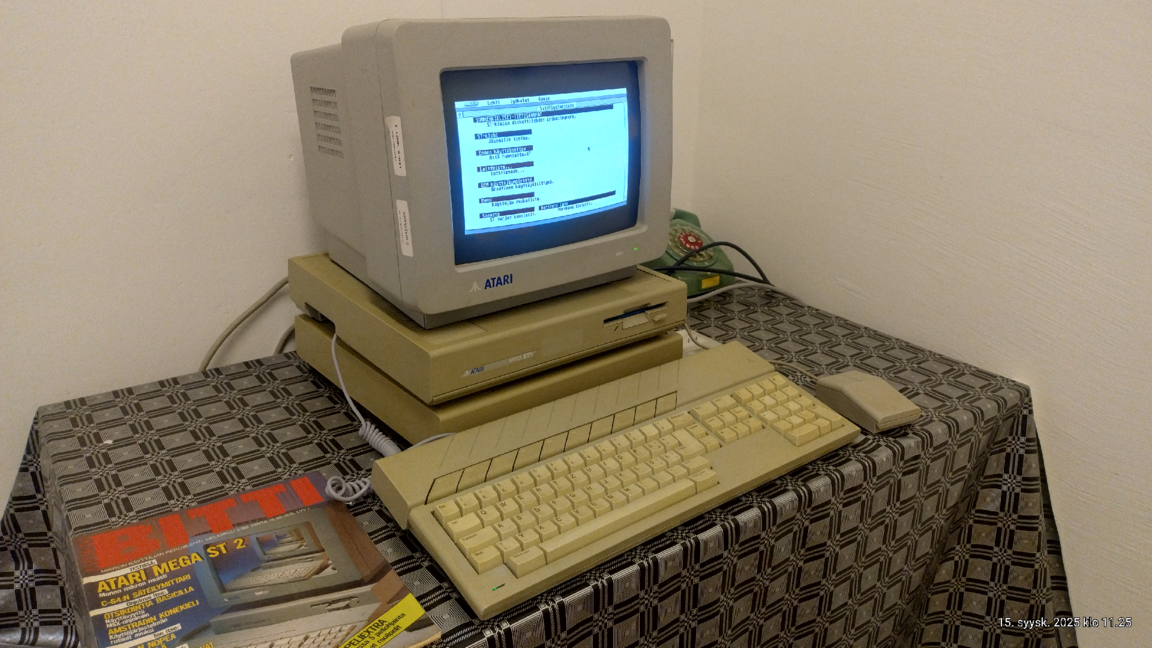
In the second half of the 1980s, personal computing was undergoing a period of rapid transformation. The early 8-bit home computer boom had given way to a new generation of 16-bit machines that promised far more power, sophistication, and versatility. In this changing landscape, Atari—best known in the public imagination for video games and home consoles—sought to redefine itself as a serious contender in professional computing. The result was the Atari Mega ST series, followed a few years later by the refined Mega STE. These machines combined the graphical, multitasking environment of the ST family with new features aimed squarely at business users, desktop publishers, and musicians.
Origins and Release
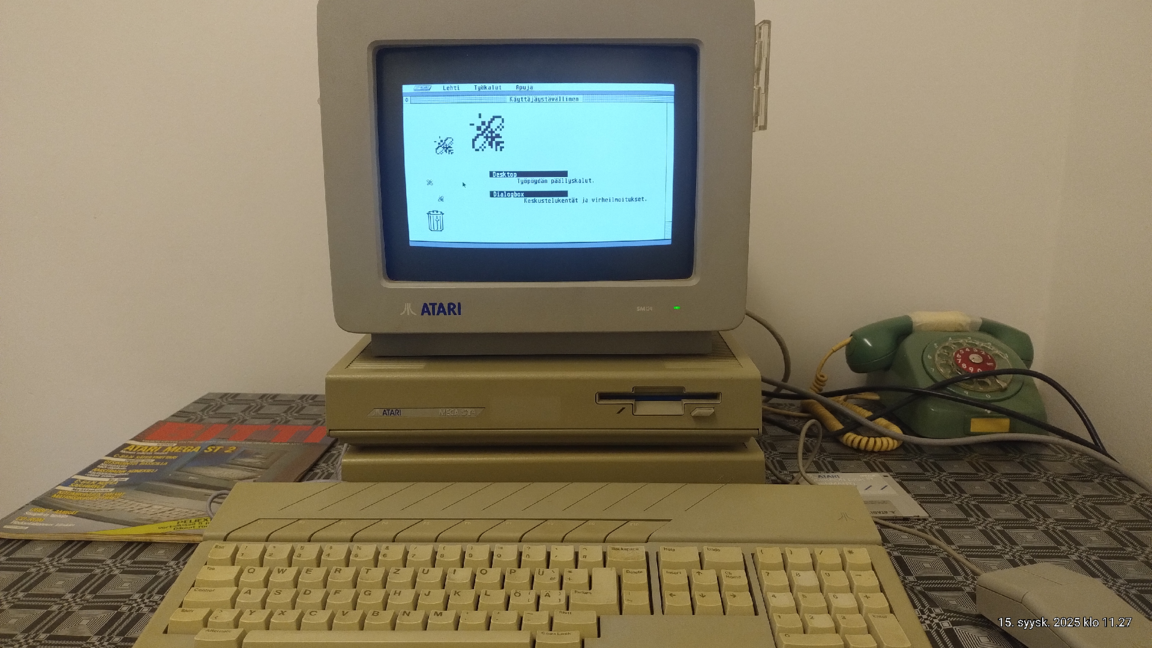
The Atari ST line itself debuted in 1985, shortly after Atari had been acquired by Jack Tramiel, the former head of Commodore. Tramiel’s goal was clear: deliver affordable but capable 16-bit machines to compete not only with the Apple Macintosh and Commodore Amiga but also with IBM PCs. The ST computers were based on the Motorola 68000 CPU, running at 8 MHz, and shipped with the GEM graphical operating environment from Digital Research. The Atari Mega ST series was announced in 1987 as a higher-end branch of the ST family. Where the earlier 520ST and 1040ST were marketed largely to consumers and hobbyists, the Mega ST aimed at professionals. It came in three memory configurations—2 MB, 4 MB, and 8 MB—and featured a detached, full-sized keyboard, a more robust system case, and an internal expansion bus. This design gave the Mega ST the look and feel of a business workstation, more akin to the Macintosh II or IBM PC/AT than to a home computer. In 1991, Atari released the Mega STE, a natural evolution of the Mega ST concept. It was based on the same 68000 processor but clocked at up to 16 MHz, making it roughly twice as fast. The Mega STE also introduced features from the Atari TT workstation (such as a built-in hard disk option and enhanced graphics modes) while maintaining compatibility with existing ST software.
Strengths of the Mega ST
The Mega ST quickly established itself as a machine with distinct strengths in several domains:
- Desktop publishing: Bundled with high-resolution monochrome monitors and supported by the Atari SLM804 laser printer, the Mega ST became one of the first affordable desktop publishing systems. With software like Calamus and PageStream, it offered capabilities that rivaled those of Apple Macintosh systems but at a fraction of the cost.
- Music production: Thanks to built-in MIDI ports, a rarity at the time, the entire ST line (including the Mega ST) became the computer of choice for professional musicians. Sequencers like Cubase and Notator were designed for the ST, and many major recording studios in the late 1980s and early 1990s relied on Mega STs as the backbone of digital music production.
- Professional design: The separate keyboard, sturdy case, and expansion bus gave the Mega ST a professional appearance and allowed for better ergonomics compared to the smaller ST models.
- Price-to-performance ratio: At launch, the Mega ST models were priced between $1,500 and $3,000 USD, depending on configuration. While not inexpensive, this was still considerably cheaper than Apple or IBM systems with similar graphical and publishing capabilities.
Expansion and Peripherals
One of the selling points of the Mega ST was its expandability. The internal expansion slot allowed third-party developers to create accelerator boards, memory upgrades, and even graphics enhancements. The machines also supported:
- External floppy and hard drives.
- The Atari SLM series of laser printers.
- Networking hardware for office use.
- A variety of MIDI devices, samplers, and synthesizers.
The Mega STE expanded on this flexibility by including a VME bus slot, allowing more sophisticated expansion cards (such as high-resolution graphics adapters and Ethernet boards) to be added.
Differences from the IBM PC
Though the Mega ST and its successor occupied similar professional niches to IBM PCs, they diverged significantly in architecture and philosophy. PCs of the late 1980s relied on DOS and a growing base of business software, while the Mega ST offered a graphical desktop environment (GEM) out of the box. The Atari machines were also more tightly integrated with multimedia features such as MIDI, which were virtually nonexistent in the PC world at the time. However, compatibility was always a challenge. The Mega ST could not natively run PC software, which limited its appeal in offices dominated by IBM standards. Some emulation options existed, but they were slow and rarely practical for business users who required mainstream applications like Lotus 1-2-3 or dBase.
Software for the Mega ST
The software library for the Mega ST was diverse, reflecting its dual identity as both a professional and creative machine.
- Desktop publishing: Calamus became legendary on the ST platform, and many small publishers used it to produce professional-quality magazines, brochures, and books.
- Music: Sequencers like Steinberg Cubase, C-Lab Notator, and Dr. T’s KCS transformed the Mega ST into a global standard in music studios.
- Graphics and CAD: Applications like Degas Elite and CAD 3D attracted designers and engineers.
- Business software: Word processors, spreadsheets, and databases were available, though they rarely matched the breadth and compatibility of PC equivalents.
- Games: While the Mega ST was positioned as a professional machine, it was still software-compatible with the broader ST family, meaning it could run thousands of games developed for the platform.
Reception in the Press
Atari’s Mega ST series was generally well received in the computing press, particularly in Europe. Reviewers praised the machines’ affordability compared to Apple and IBM products, as well as their suitability for desktop publishing and music production. The bundled monochrome monitors were often singled out for their sharp resolution, ideal for serious work. Criticism, however, centered on the lack of widespread business software, limited marketing outside Europe, and the challenges of competing in a market where IBM compatibility was becoming the de facto standard. In the United States, the Mega ST never achieved significant penetration, as businesses were already committed to PCs or Macs.
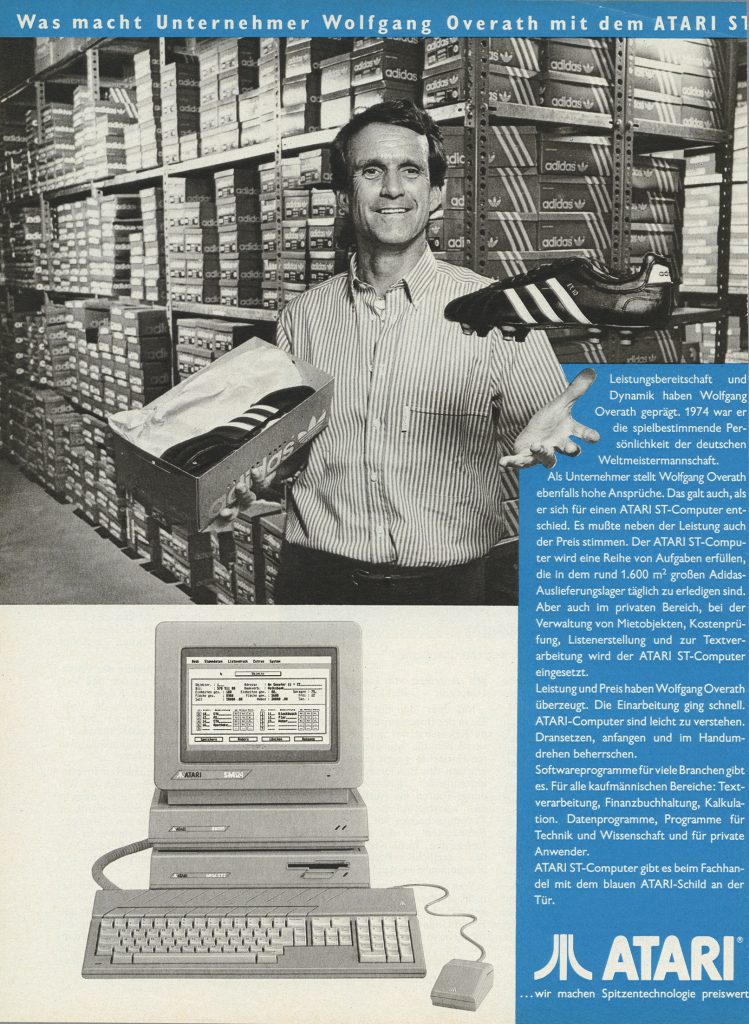
The consolidation of the market towards PCs was the fate of Atari.
The Mega STE, introduced in 1991, was a capable refinement of the Mega ST, but by then the market had shifted dramatically. The early 1990s saw the rise of faster 32-bit systems, Windows PCs, and increasingly powerful Macs. Atari struggled to maintain relevance, despite its innovations. The company’s final push in the professional computing market came with the Atari TT030 workstation and the Falcon030 multimedia computer, but neither could reverse its decline. By the mid-1990s, Atari had exited the computer business entirely, focusing briefly on game consoles before ultimately disappearing as an independent company. The Mega ST series was most successful in Europe, particularly in Germany, the United Kingdom, and Scandinavia. Germany, in particular, became a stronghold for desktop publishing and MIDI music production using Mega STs. In the United States, however, sales remained modest, and the machines were largely overshadowed by the Macintosh in creative industries.
Legacy
The Atari Mega ST and Mega STE represent one of the most interesting chapters in Atari’s history. These machines bridged the gap between consumer-friendly home computers and professional workstations, and they gave Atari credibility in industries—music and publishing—where its name had never before carried weight.
Though their professional ambitions were ultimately undercut by the juggernaut of IBM compatibility, the Mega STs left a lasting mark. Musicians of the late 1980s and early 1990s often recall them as indispensable tools, while European desktop publishers remember them as the first affordable path to professional-quality print production. Today, retro computing enthusiasts regard them as elegant, forward-looking machines that might have succeeded more fully in a less PC-dominated world. The Atari Mega ST offered great value for money in the 1980s and early 1990s. It was a supercomputer in its class that was fully accessible to the average consumer.







 English (UK)
  Suomi
Suomi  Español