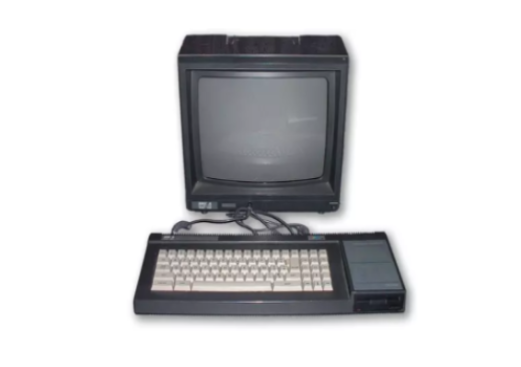
The Ultimate 8-Bit 128kb Experience:
Amstrad CPC6128
The Amstrad CPC (Colour Personal Computer) was a popular home computer in the 1980s that offered users a comprehensive IT package. It was developed by the British company Amstrad, led by Alan Sugar. The CPC range quickly became a success, particularly in Europe, thanks to its ease of use, competitive price, and versatile features. The CPC series included several models that met the different needs of users, whether for programming, gaming, or office work. The Amstrad CPC was launched in 1984 and continued to be manufactured until 1990. The devices were mainly manufactured in the UK, but production later expanded to other countries, such as Asia, to reduce costs. Approximately 3 million CPCs were sold worldwide, making it a significant competitor to the most popular home computers of the time, such as the Commodore 64 and ZX Spectrum.
Most sales took place in Europe, particularly in the United Kingdom, France, Germany, and Spain. The CPC was particularly popular in France, where it achieved an even larger market share than the Commodore 64. In Finland, the Amstrad CPC was not as well known as in its main European markets, but it was sold to some extent through local retailers. In Finland, the device attracted gamers and technically oriented enthusiasts in particular. The Amstrad CPC’s greatest strength was its competitive price and package solution. For example, the CPC 464 model launched in 1984 cost around £250, and the price included the computer, an integrated C cassette drive, and a color monitor (or a black-and-white monitor in a cheaper package). This made it an attractive option, as many competitors, such as the Commodore 64, required the purchase of a separate monitor or television. In Finland, CPC prices varied, but import costs made them higher than the models sold in the UK, for example. Amstrad aggressively marketed the CPC to families, students, and small businesses. The company advertised the device as a user-friendly total solution that did not require separate accessories or complex connections.
Production of the Amstrad CPC ended in 1990, when the home computer market began to shift towards PCs and game consoles. However, the legacy of the CPC lives on, and its position at the heart of the European home computer revolution of the 1980s is undisputed. For many users, the CPC was their first contact with information technology and programming, and it was also the starting point for the careers of many game developers. In its day, the Amstrad CPC was a revolutionary home computer that combined efficiency, usability, and affordability. Although it did not achieve the same global popularity as the Commodore 64 or ZX Spectrum, its impact, especially in the European market, was significant. In Finland, the CPC remained a minor phenomenon, but the device is still remembered as one of the most important home computers of the 1980s.









 English (UK)
  Suomi
Suomi  Español