Shaping the MSX Standard
and Home Computing Culture
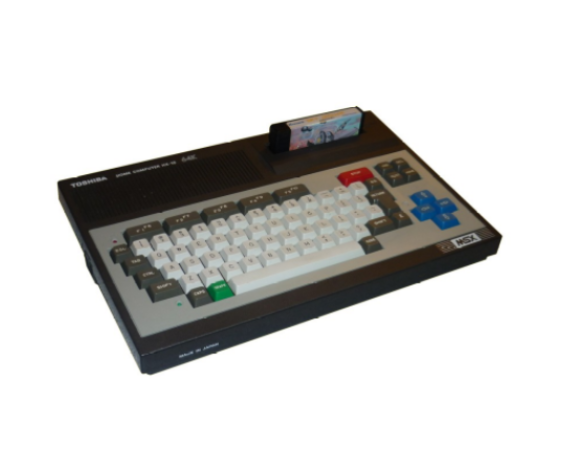
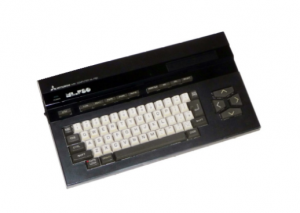
In the early 1980s, the home computer market in Japan and Europe was rapidly evolving, with multiple companies striving to capture the emerging consumer interest in personal computing. Among these was Toshiba, which contributed to the burgeoning MSX ecosystem with the Toshiba HX-10, a home computer released in 1983. Designed according to the MSX standard—a collaborative effort by Microsoft Japan and ASCII Corporation to create a unified platform—the HX-10 exemplified Toshiba’s commitment to providing affordable, versatile, and compatible computing solutions for hobbyists, students, and home users. At its core, the HX-10 adhered to the MSX specifications, featuring a Zilog Z80A CPU running at 3.58 MHz, with 16 KB of RAM and 16 KB of video RAM. Graphics were handled by the Texas Instruments TMS9918 Video Display Processor, which enabled a resolution of 256×192 pixels with 16 colors, as well as support for up to 32 sprites. Sound was delivered through the AY-3-8910 PSG, offering three-channel audio synthesis. This combination of hardware allowed the HX-10 to support both productivity software and engaging video games, placing it firmly within the growing culture of home computing entertainment.
One of the defining advantages of the HX-10—and the MSX standard in general—was its compatibility. Users could run a wide range of software and games designed for the MSX ecosystem, ensuring a broad library of titles from day one. This standardization was revolutionary in an era when most home computers used proprietary hardware and software, which fragmented the market and limited software availability. For Toshiba, aligning with MSX meant that the HX-10 could immediately appeal to both casual gamers and educational users, bridging the gap between entertainment and practical computing. Gaming was a central focus for the HX-10. Thanks to the MSX standard and its capable graphics and sound hardware, the HX-10 could run popular titles such as Metal Gear, Knightmare, and various arcade ports that became staples of the 1980s home gaming scene. The machine’s cartridge-based format simplified loading, reduced errors common with cassette tapes, and encouraged the distribution of larger, more complex games. This made the HX-10 not only a tool for learning but also a centerpiece of interactive entertainment in households across Japan and other MSX markets. In addition to gaming, the HX-10 served as an educational platform. Its built-in MSX BASIC allowed users to write their own programs, experiment with logic and algorithms, and develop problem-solving skills. Schools and computing clubs adopted MSX computers like the HX-10 to introduce students to programming concepts, fostering a generation of technically literate users. The system’s expandability—supporting additional memory, disk drives, and peripherals—enhanced its versatility, making it a practical home computer for both learning and productivity.
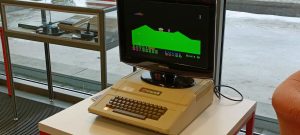
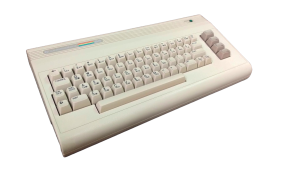
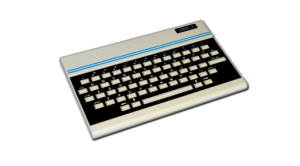
From a cultural perspective, the HX-10 reflected the MSX vision of a standardized, accessible home computing experience. In contrast to fragmented platforms such as the ZX Spectrum or Commodore 64, MSX machines like the HX-10 allowed software developers to target a consistent hardware base, which encouraged innovation and broader adoption of home computing technologies. Toshiba’s reputation for quality hardware further reinforced consumer confidence, and the HX-10’s sleek design and reliable performance contributed to its appeal among families and hobbyists alike. Despite its advantages, the HX-10 faced competition from more established 8-bit platforms such as the Commodore 64, Sinclair Spectrum, and NEC’s PC-8801 series. While the MSX standard offered compatibility, it initially lagged behind in graphics and sound performance compared to some rivals. Nevertheless, the HX-10 and its MSX peers thrived in Japan and parts of Europe, creating a vibrant software market, encouraging hobbyist programming, and fostering creativity in both entertainment and education. Ultimately, the Toshiba HX-10 stands as a representative example of the early MSX vision: a standardized, versatile, and accessible home computer capable of both educational and entertainment functions. Its combination of compatibility, expandable hardware, and rich software library helped define the experience of home computing in the mid-1980s. For users and developers alike, the HX-10 demonstrated that personal computers could be fun, instructive, and inclusive, setting a precedent for software standardization and cross-platform compatibility that continues to influence computing today. Though it was overshadowed in certain markets by more dominant 8-bit machines, the HX-10’s role within the MSX ecosystem and its contribution to home computing culture remain noteworthy, illustrating Toshiba’s commitment to delivering quality and innovation in the era of early personal computing.
—








 Español
  English (UK)
  Suomi
Suomi