
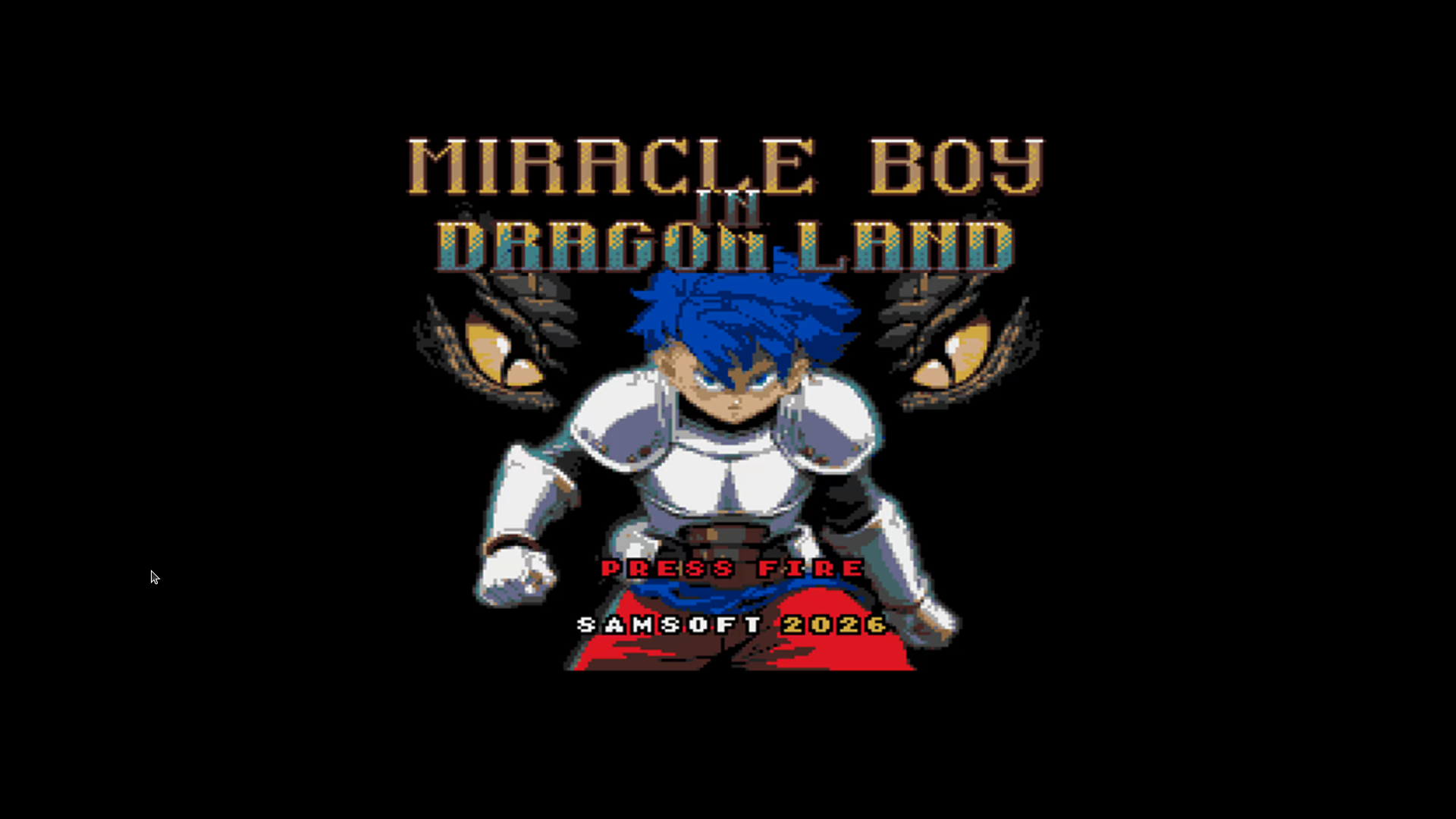
A brand-new game announcement at The Computer Museum of Kallio in Helsinki!
Premiering on July 4, 2026: Miracleboy in Dragon Land for the Atari ST!
Further information: www.kalliontietokonemuseo.fi
What is the Atari ST/STE
When we talk about the Atari ST, we’re talking about one of the most important home computers of the late 1980s. Released in 1985, the Atari ST brought the powerful Motorola 68000 processor, a graphical user interface, and MIDI ports within reach of ordinary enthusiasts, making the machine a favorite among both gamers and musicians. The ST series competed directly with the Commodore Amiga and gained a particularly strong foothold in Europe. Many remember the machine for classic games such as Dungeon Master, Carrier Command, Chaos Strikes Back, and Populous.

The Heir to Wonder Boy
Although Atari discontinued the ST product line back in the 1990s, the machine still has an active community of enthusiasts. It is thanks to this community that new games are occasionally released, demonstrating just how much can still be squeezed out of the old hardware. One of the most impressive releases in recent years is Miracle Boy in Dragon Land, released in 2026. The game has already been hailed as one of the most significant new Atari ST releases in decades.
From the very first screenshots, it’s clear where the inspiration came from. Miracle Boy in Dragon Land is a love letter to Sega’s Wonder Boy series, particularly the Monster World games. However, this isn’t just a copy; it’s a game in its own right. The player steps into the shoes of a young hero and sets out to explore Miracle Land. Along the way, you’ll traverse villages, caverns, forests, and fortresses; talk to characters; collect money; acquire better weapons and gear; and face spectacular boss battles. The game combines platforming, action-adventure, and light RPG mechanics in a way that will feel instantly familiar to all fans of the 16-bit era.
There has been a lot of controversy surrounding the game, with people wondering whether it infringes on Sega’s Wonder Boy. We looked into the matter at a site specializing in computer culture and asked Museo de Informática de Kallio in Helsinki, Finland about the case and asked a question:
“Was the game too similar to Sega’s version, and was it even permissible to make it in the first place?”
The museum had a clear stance on the matter, backed by solid reasoning: imitation is the sincerest form of flattery. “If the game had been insignificant, Miracleboy in Dragonland would never have been created. There’s no need to worry about this—quite the opposite. It’s a joyful and admirable thing that there are people who are willing to go to the trouble of doing this for fun. This isn’t a business; the operation is so small-scale. It’s a cultural phenomenon, we see this was an endeavor that had a noble goal.
The graphics are stunning
The biggest surprise, however, is the technical execution. The standard capabilities of the Atari ST are well known, and the machine is not generally considered as impressive a gaming platform as the Amiga. Miracle Boy, however, succeeds in showing how skilled programming can push the boundaries. The levels are colorful and detailed. The characters move smoothly, the animations are carefully drawn, and the environments are full of personality. What’s particularly impressive is that the game was built specifically for the Atari ST and isn’t some hastily made port from another platform. In many places, it’s hard to believe you’re looking at a new Atari ST game rather than a lost commercial release from the early 1990s. If someone had shown this game to ST enthusiasts in 1991, many would have considered it a commercial hit of the new generation.
The gameplay hits the mark
When it comes to retro games, however, technical prowess isn’t enough if the gameplay doesn’t hold up. In this regard, Miracle Boy succeeds brilliantly. The controls are precise, which is vital in an action platformer. The level design rewards exploration, and acquiring new gear creates a satisfying sense of progress. The difficulty level remains mostly fair, though a few boss battles do require some practice. The game also understands an important thing that many modern indie games forget: fun. Miracle Boy doesn’t try to be dark, complex, or unnecessarily serious. It offers a colorful fantasy adventure where there’s always something to discover.
Sound Design
The Atari ST’s YM2149 sound chip is not known for being the most versatile solution in the world, but the compositions support the atmosphere well. The music has a strong 1980s and 1990s console influence. The tracks are memorable and create just the right kind of adventure atmosphere.

A special detail for Finnish enthusiasts
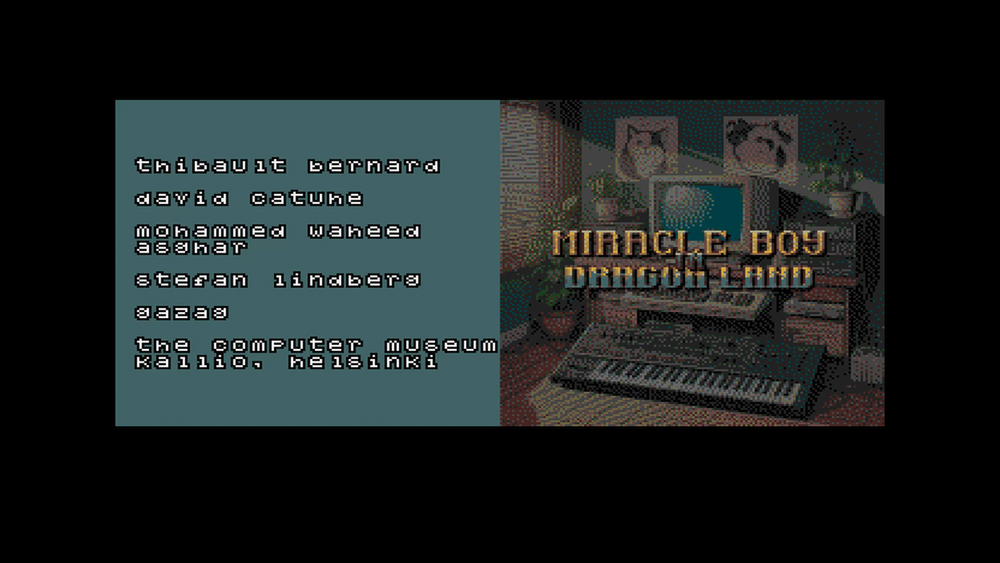
The game’s end credits feature a surprise that will be of particular interest to Finns. The Kallio Computer Museum, known for preserving and showcasing computer culture to the public, is listed as a sponsor. The museum’s traveling “I love 8-bit®” exhibition, meanwhile, has been on display at numerous events across Finland and is also part of the program for the European Capital of Culture year in 2026. The best part is that Miracle Boy in Dragon Land isn’t limited to home computer emulators. You can also try the game at the Kallio Computer Museum and at the traveling I love 8-bit® exhibitions, where the public can explore original Atari hardware and computer culture.
Verdict: Miracle Boy in Dragon Land is the Atari ST’s belated masterpiece
Miracle Boy in Dragon Land is exactly the kind of game whose existence makes retro gaming fascinating. It is not a nostalgic reminiscence of the past, but a new game for an old platform. At the same time, it proves that the nearly forty-year-old Atari ST still has untapped potential in the hands of skilled developers. If you love Wonder Boy, Monster World, Sega’s 16-bit era, or the golden years of the Atari ST, Miracle Boy in Dragon Land is definitely on your must-play list. It feels like a lost classic that was discovered by accident decades too late. Miracle Boy in Dragon Land isn’t just an excellent game. It’s one of the best Atari ST games ever made.
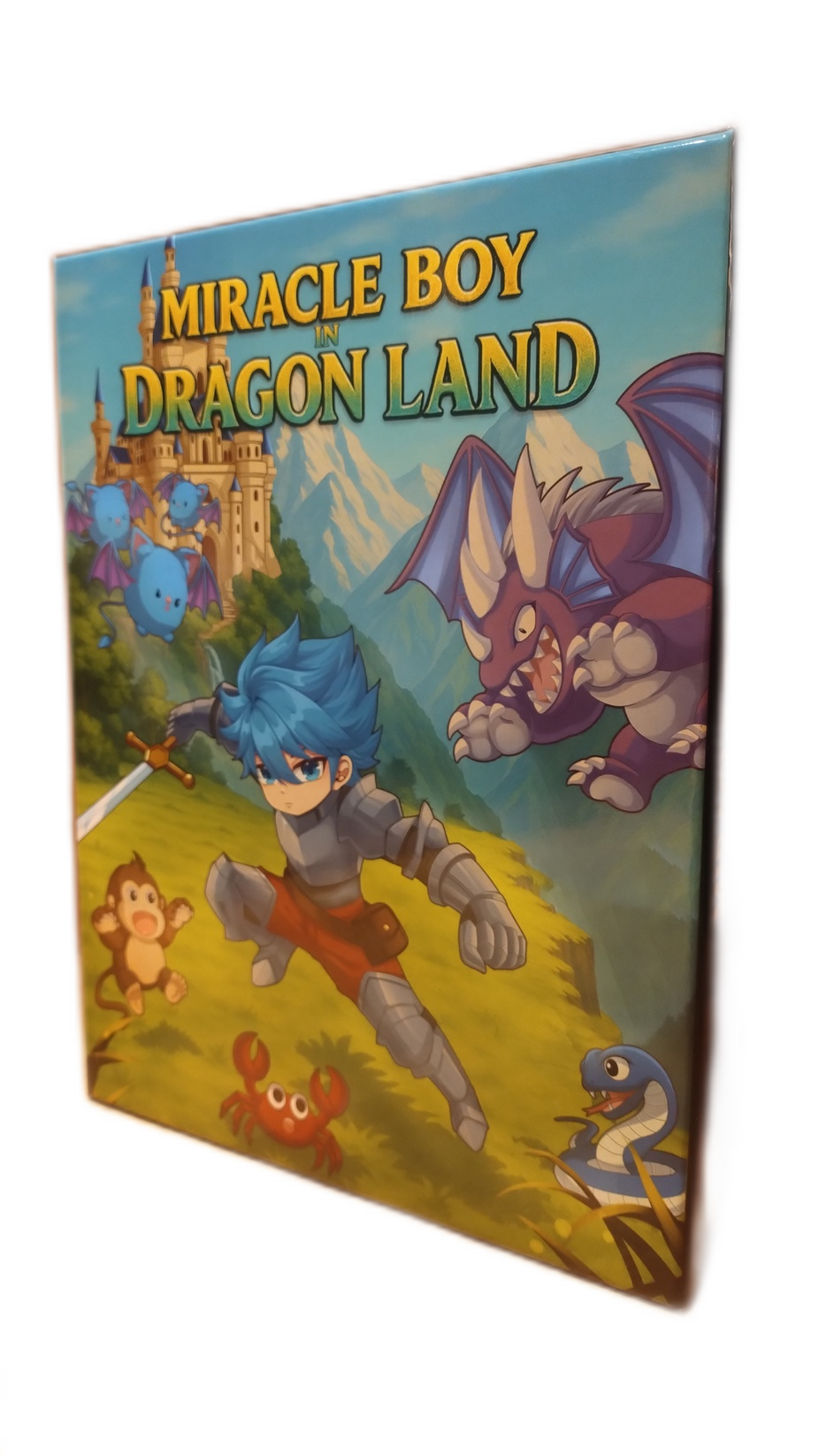
The developer : Samsoft
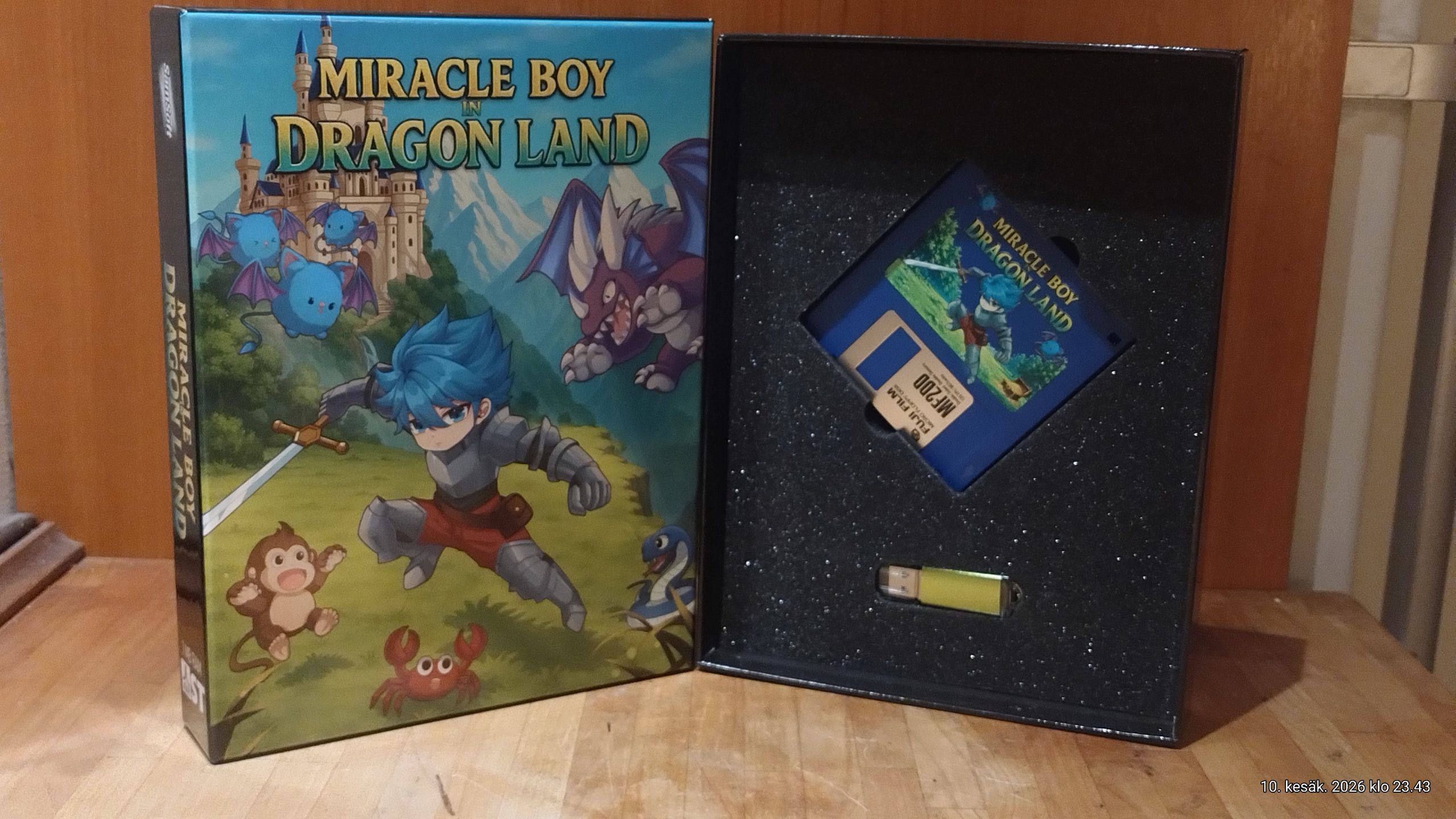
Miracle Boy in Dragon Land is exclusive gaming experience on the Atari ST computer, but how can you play it?
If you want to enjoy a unique gaming experience and the computer culture, then visit The Computer Museum of Kallio in Helsinki. Another option is to book the I love 8-bit® computer exhibition from the museum to your place. In the exhibition, you and your guests can enjoy amazing experiences from the golden age of computer culture. It is the era that ended long ago, but people still want to experience it today.The popularity of I love 8-bit® in Finland has proven this to be true.
The show are distributed by The Computer Museum of Kallio on request. Further information from the museum desk on site or by email: info@ilove8bit.fi
 Español
  English (UK)
  Suomi
Suomi