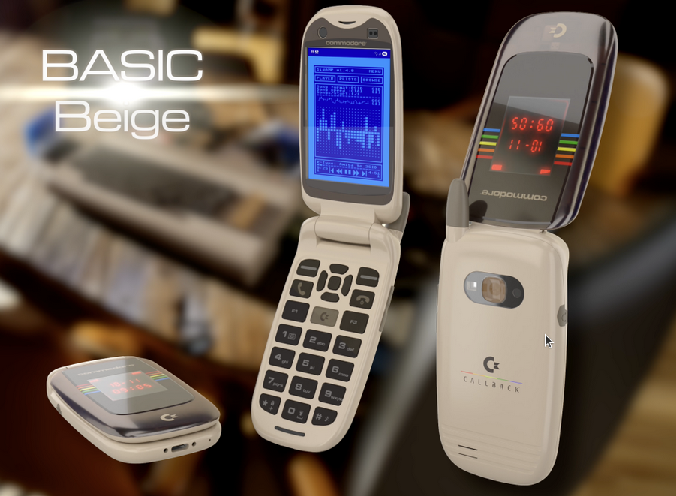
Commodore is launching a new product line of hybrid phones
Commodore is introducing a completely new product category to the mobile phone market: hybrid phones. This refers to a device that is not a smartphone, even though it can run Android apps if needed. On the other hand, Commodore’s new product isn’t a basic phone either, as it offers features more advanced than those found on basic phones. Hybrid phones fill a gap in the market, as there has been a lack of a product category offering features more advanced than those of basic phones.
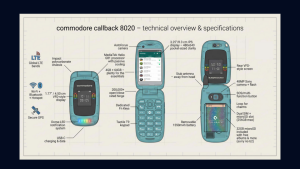
The Commodore Callback 8020 is one of the first models in this product category. At the time of writing, it is known that Commodore’s upcoming hybrid phone will feature instant messaging capabilities, a decent camera compared to basic phones, and the ability to share a Wi-Fi hotspot connection. As such, it is a hybrid phone, and thanks to its Android compatibility, it can be expanded to include features familiar from smartphones. For software developers, a ready-made framework exists for Commodore’s hybrid phone; particularly from a Finnish perspective, Commodore’s phone is interesting due to its operating system integration. Jolla, a company with roots in Nokia, has joined the project, and Commodore’s new hybrid phones run on Jolla’s Sailfish operating system. This is, therefore, tried-and-true, long-developed technology that is being applied to the Commodore Callback 8020 hybrid phone.
Learn more about the Commodore Callback phone at the Happy Hacking Day event in 2026 at Haaga-Helia University of Applied Sciences in Helsinki, Finland on October 1, 2026.
What’s the idea behind Commodore’s phone?
Studies have shown that constant internet use is harmful and addictive, a point Commodore highlights in its announcement of a new phone product. Excessive internet use can cause side effects such as a decline in cognitive skills, attention deficits, and addiction, while constant engagement with social media can lead to side effects such as depression. But today’s networked society almost forces people to be constantly online. Staring at a smartphone screen for long periods often involves mindlessly scrolling through streams of information, and this is frequently done to satisfy a sense of dependence on the device. Tech giants have made phones indispensable and built in features that cause addiction, while at the same time these devices spy on and analyze users. The digitization of society means that it is not easy to stop using the Internet or reduce one’s online presence. Smartphones also mean that privacy is practically nonexistent, as smartphone users effectively become products of tech companies, and user data is their commodity. But how does Commodore’s hybrid phone address these challenges that smartphone use poses for its users?
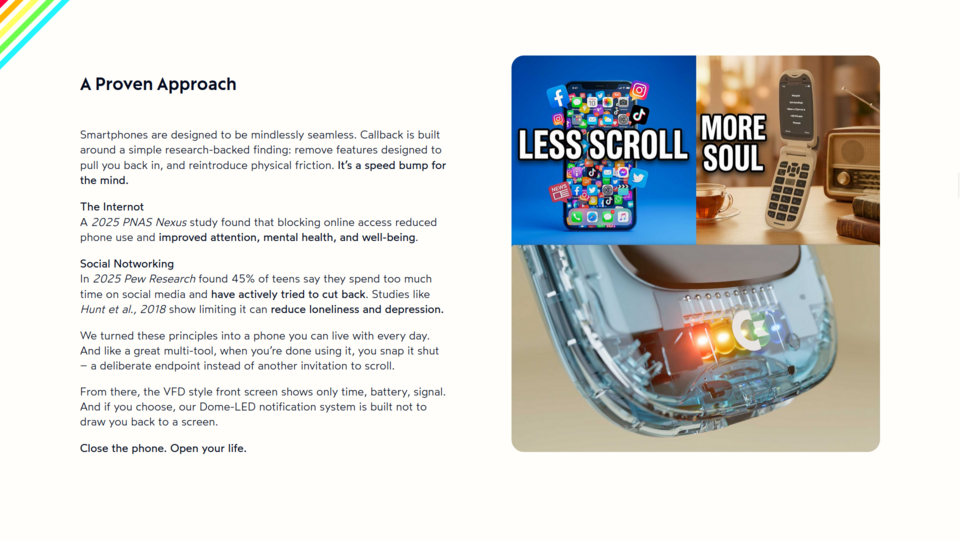
The starting point is to change usage habits
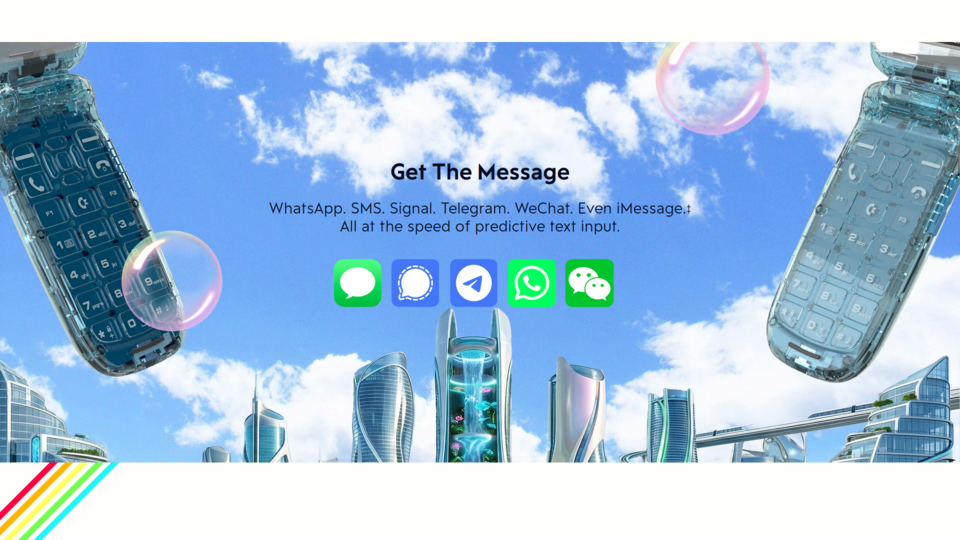
The idea behind Commodore’s new phone is to take back control of phone usage. It doesn’t come with a web browser or email by default, but it does include instant messaging options such as WhatsApp, Signal, Telegram, and iMessages. Unlike basic phones, it also comes with a decent camera and a Wi-Fi hotspot, which allows you to connect your computer to the internet. In practice, you don’t miss out on anything, since phone usage is managed more through the computer, but you can still use the phone to message just like a smartphone via instant messaging apps. Whether the phone is a Commodore or another brand, this hybrid between a basic phone and a smartphone is a welcome addition to the market—and it’s compact, too. It’s hard to find a smartphone these days that’s both compact and easy to carry. Commodore’s phone focuses on mobile messaging in a compact form factor. Hopefully, there’s room in the market for this kind of concept, since for some people, basic phones offer too few features, while smartphones are bulky devices with too many features and lack privacy protection.
In hybrid phones, the most important feature is not technological. It is rather communicative.
But here’s the point—this is why the 8020 is an important product: When a Commodore Callback 8020 user sends a message, the recipient can be fairly certain that it wasn’t sent by artificial intelligence or the message was not created using AI. The message has always been created and sent by a human. This can be an important value in human communication in the future. And with smartphones, you can’t be sure who sent a message or how it was created. On a Commodore phone, a message is written by one person to another.
Who is the hybrid phone intended for?
There are certain consumer groups that can be identified as suitable users of hybrid phones. In this example, we’ll take a look at Commodore’s Callback 8020 hybrid phone.
• People who want a decent second phone without smartphone features.
• People who want or need to reduce their daily Internet use.
• People who need a small phone with a decent camera.
• People who want to return to using the Commodore brand and loves retro products.
• For parents who don’t want to buy their children a smartphone but want the device to have instant messaging features
• Individuals and organizations that are concerned about privacy and data security.
• Individuals and organizations that want to reduce the power of tech giants.
• People and companies interested in participating in the counterculture
The business sector may also offer target groups for hybrid phones for specific uses.
• Employers who want to minimize the amount of time their employees spend online.
• Organizations that work on security issues.
• Individuals and organizations that need their phones to have a long battery life.
Could trend-conscious counterculture enthusiasts be the key to success?
Looking at these user groups, it seems there could be quite a few people in need of a hybrid phone like this. Commodore might have an opportunity here, as this looks like a true “blue ocean” strategy amid the sea of phone manufacturers. For consumers, the Commodore Callback 8020 may offer a solution for situations where they want to reduce or eliminate their dependence on smartphones for various reasons. But for trend-conscious counterculture enthusiasts who want to rebel against tech giants, the phone could even be called an anarchist device. It doesn’t even try to fit into a world dominated by smartphones, where smartphones control their users. This perspective on counterculture and the rebelliousness associated with it is an interesting thought experiment made possible by the Commodore hybrid phone’s approach. However, you don’t have to be a rebellious counterculture anarchist to own a Commodore hybrid phone. It serves many other purposes as well, especially if you prioritize reducing your reliance on social media and the constant need to be online.
In a way, the Commodore Callback 8020 is like punk culture in the 1970s. It doesn’t really fit into any mold, and that’s exactly what makes it interesting — just like punk, which found a social niche amid the dreariness of the 1970s.
Verdict
The concept behind the hybrid phone developed by Commodore is a good one. It shouldn’t be compared to smartphones, because it isn’t one. It should be compared to the target audience’s needs and how it meets them. The start is promising, at least. But what about the price? At least initially, the phone is quite expensive, but it’s important to remember that Commodore doesn’t make money off users’ data. However, the money for developing, manufacturing, and marketing the phones has to come from somewhere. Privacy is a luxury these days, and it comes at a price. That’s reflected in the price of Commodore’s hybrid phone. Everyone can decide for themselves whether it’s worth it in a world where the internet has destroyed privacy.
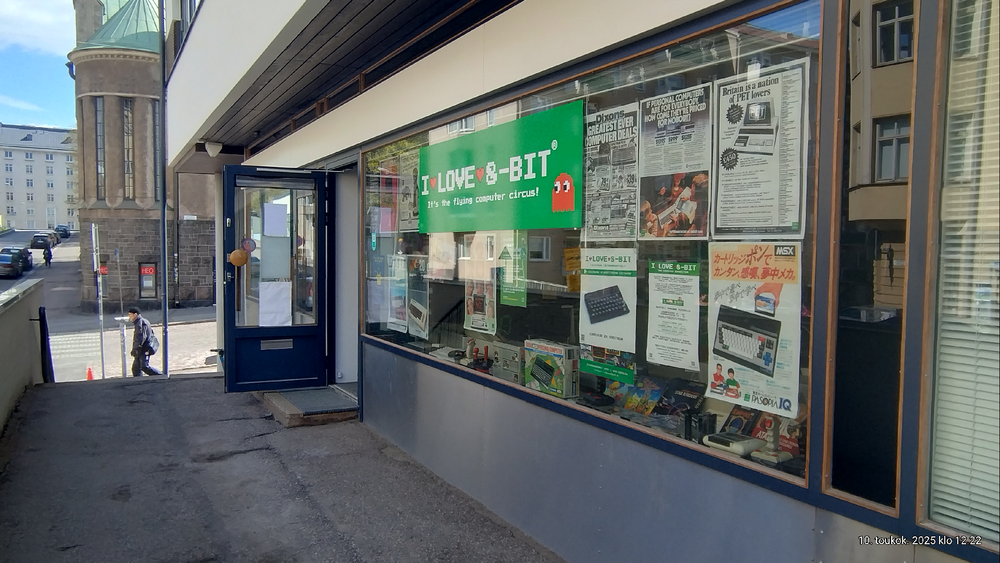
When the phone is available, you can check out the Commodore Callback 8020 phone at the traveling “I love 8-bit®” exhibitions that can be booked from The Computer Museum of Kallio.
Product Launch
How did consumers react? We monitored the situation and sales trends. How did the first week go? Click the link to read the results.
What does Commodore say about the Commodore Callback 8020 hybrid phone?
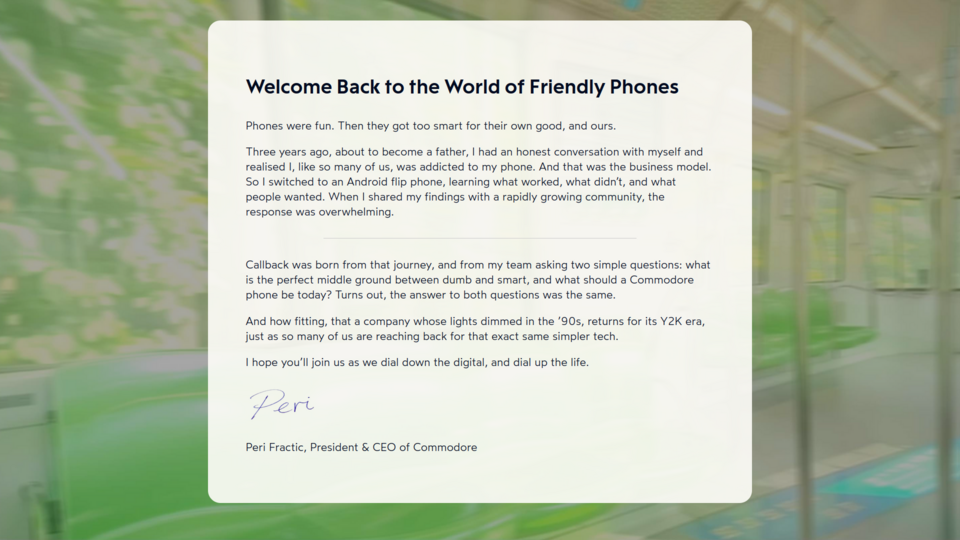
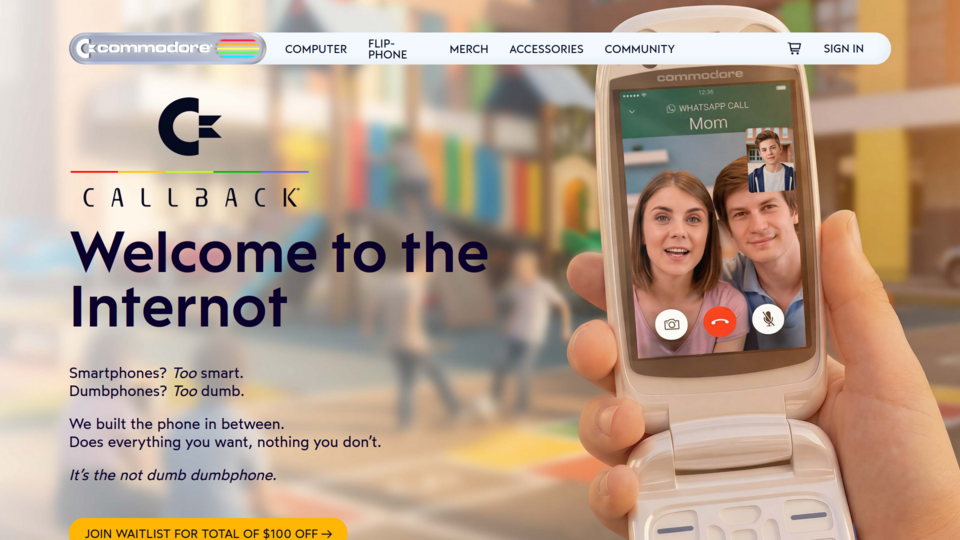
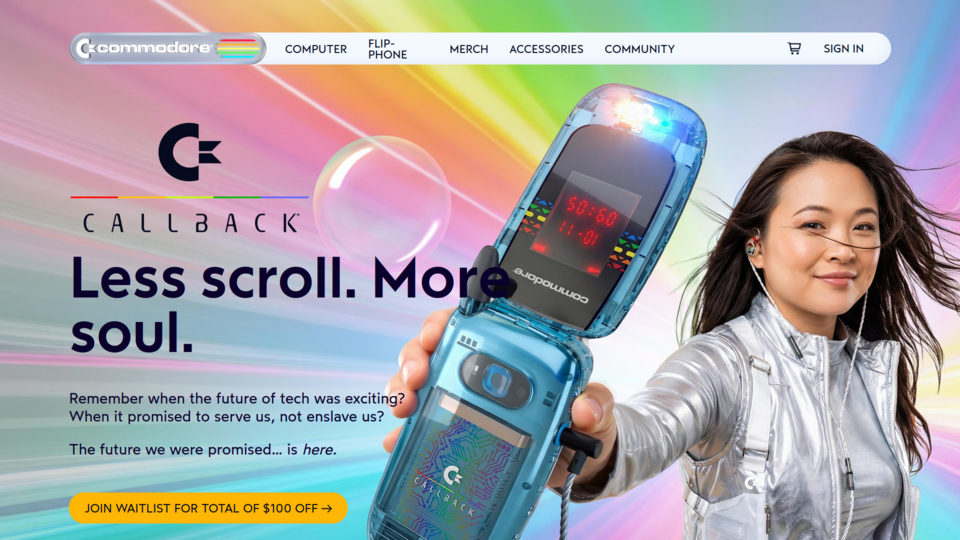
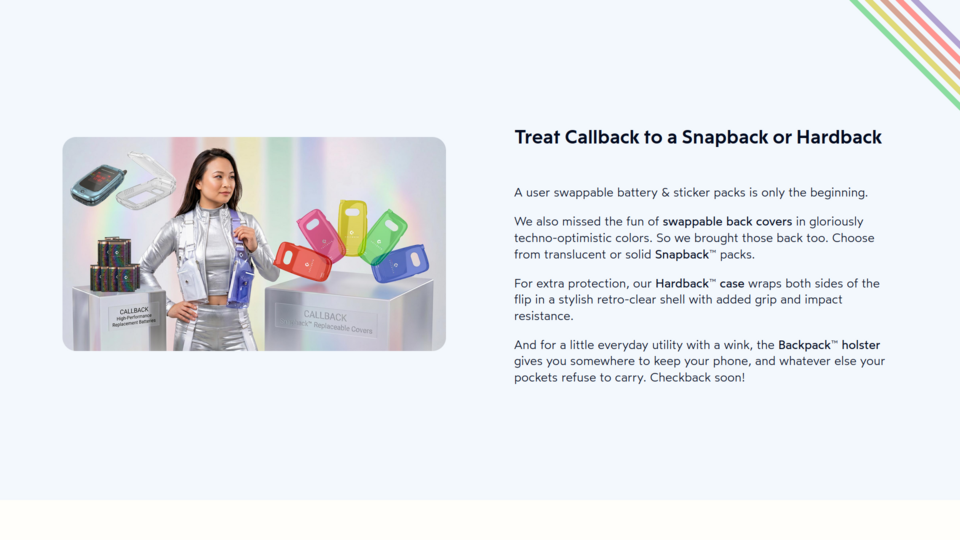
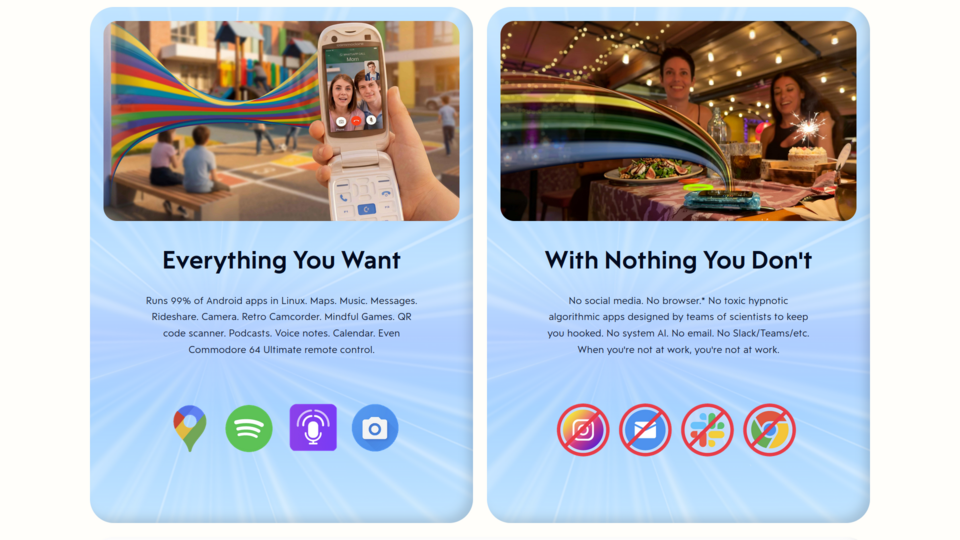
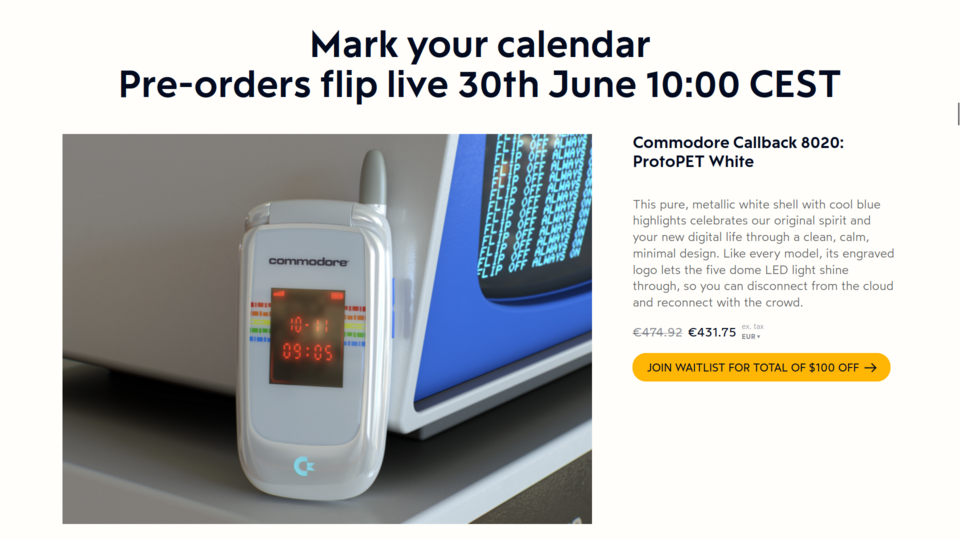
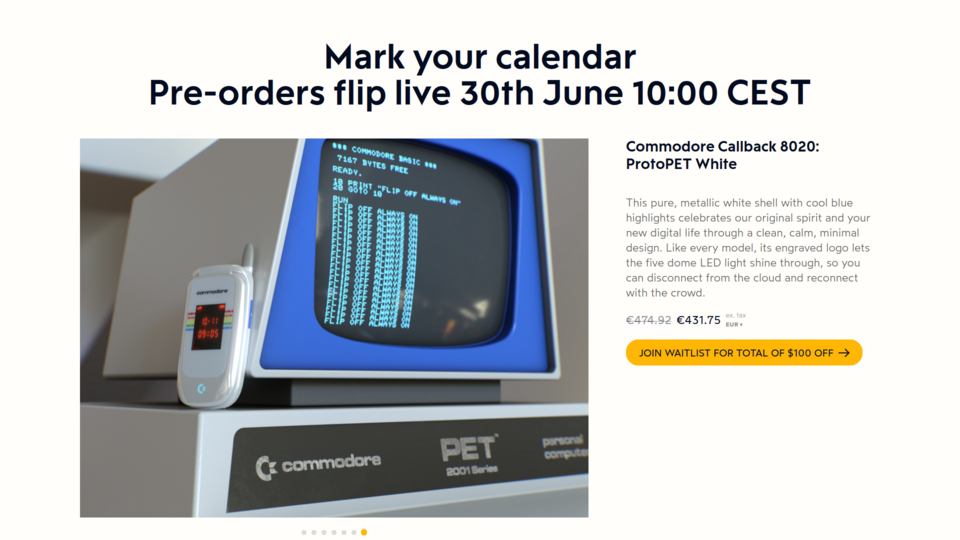
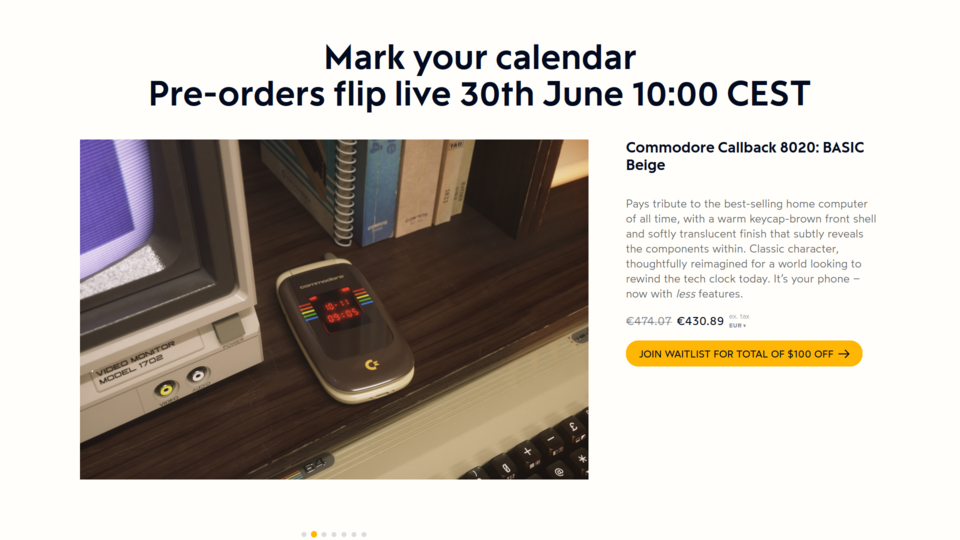
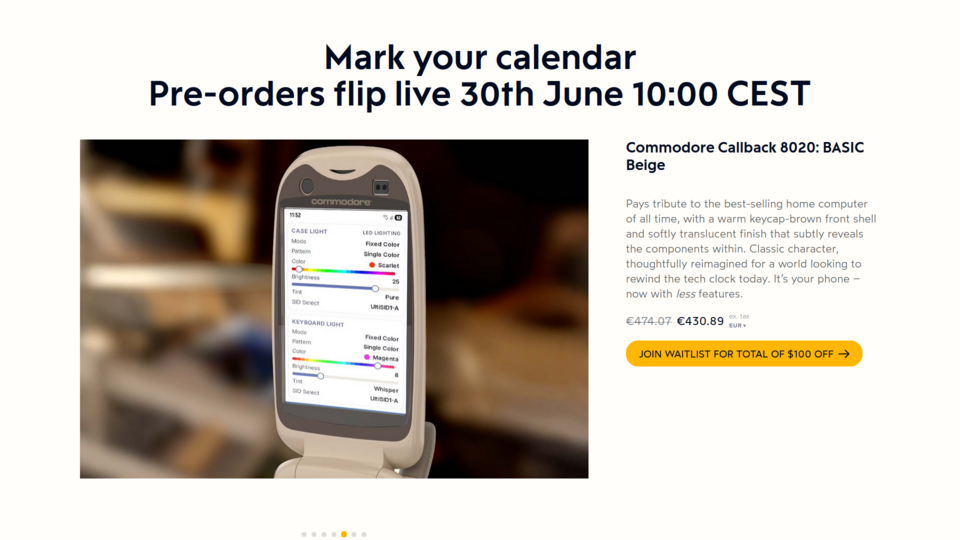
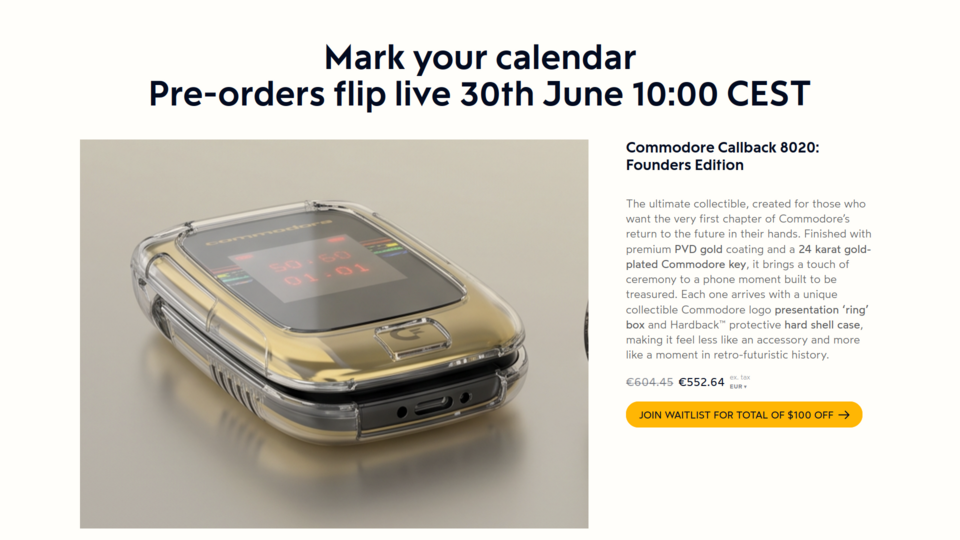
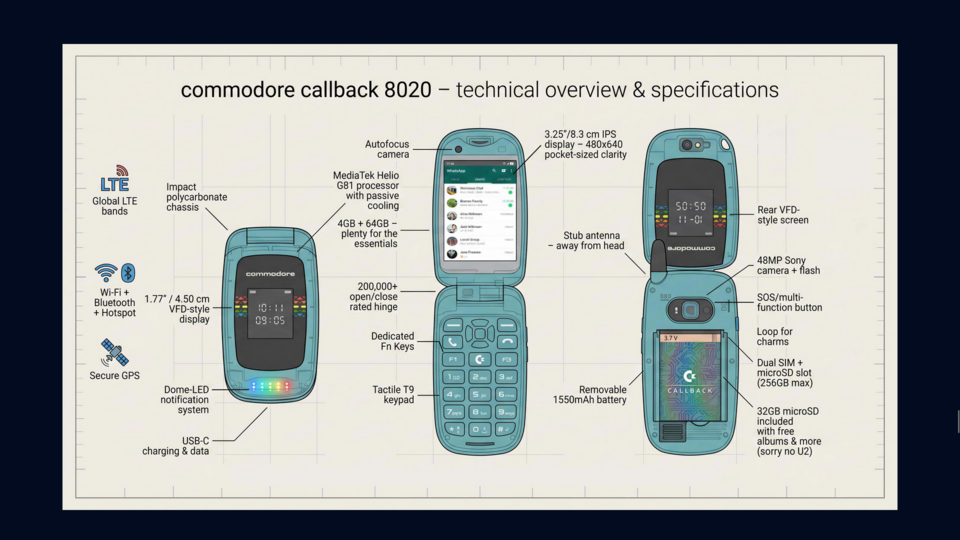
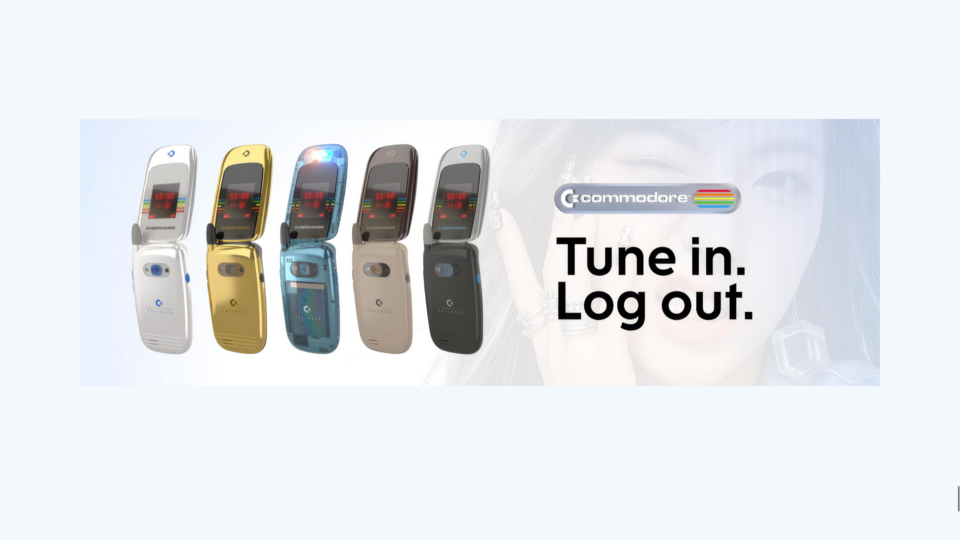
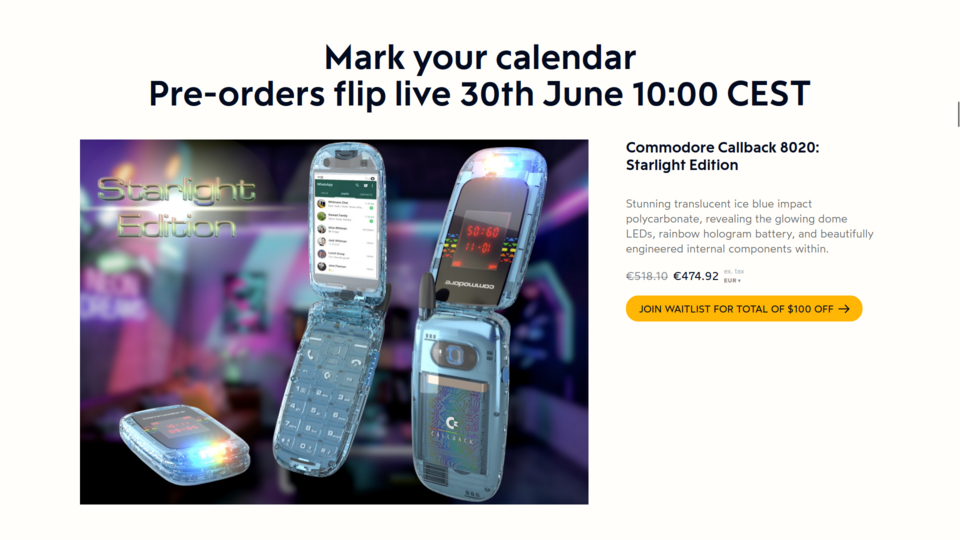
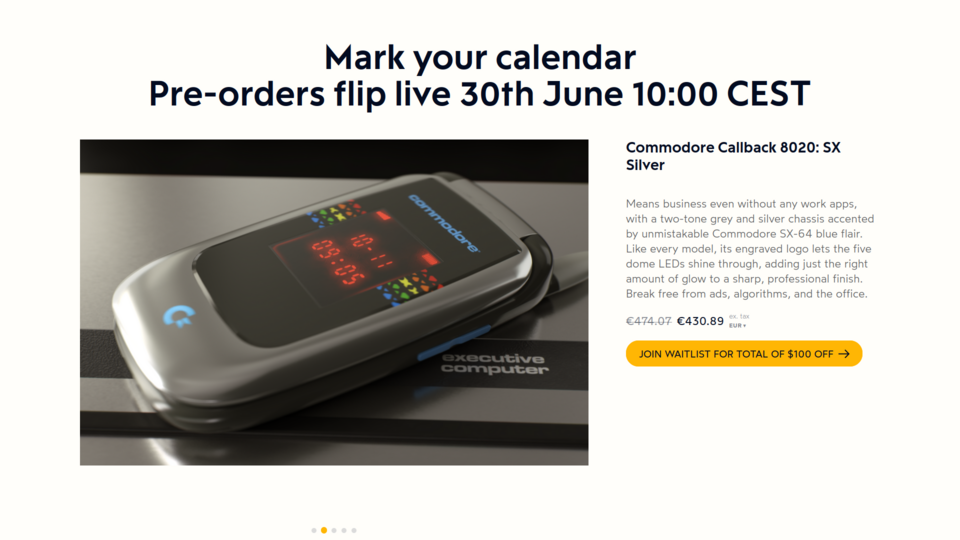
The following text and promotional images were taken from Commodore’s website on June 16, 2026. The story continues after the photos.

What is being written about this topic in the media? We’ve summarized a few articles here.
The name behind the best-selling desktop computer of all time (Commodore) made a comeback about a year ago. Christian “Peri Fractic” Simpson, best known as the host of the Retro Recipes YouTube channel (now Retro Recipes x Commodore), purchased Commodore Corporation along with “100 percent of the original and official trademarks that have defined the Commodore name since 1983,” according to a press release issued in July 2025. Simpson said the purchase price was “in the low seven-figure range.” Since the acquisition, the brand has launched the Commodore 64 Ultimate model and the Commodore 64X PC, a mini-computer housed in a case reminiscent of the Commodore 64. Today, the new Commodore unveiled a new device with a retro design: a flip phone. The Commodore Callback 8020 capitalizes on the renewed interest in basic phones. Although the Commodore phone has an internet connection, it blocks web browsers and social media “at the system level using patent-pending technology,” as stated in the company’s press release. The phone supports other internet-based features, such as maps and QR codes. Fractic told Ars Technica that Commodore’s app store, Commostore, operates on a whitelist basis, and that “social media and browsers will never make it onto that whitelist.” He added: “We have also developed patent-pending technology that prevents these apps—and only these apps—from being sideloaded onto the device. … Users can download almost anything else they want from the web if it’s not available on Commostore, but we’ve drawn a strict line against any apps that encourage doomscrolling. Just in case someone finds a way to bypass this block, we’ve also blocked access at the DNS level. So even if you manage to install TikTok, you won’t be able to access its servers.” The Callback 8020 runs the Linux-based Sailfish OS, developed by Jolla, a mobile technology company founded in 2012 by former Nokia employees that also manufactures phones. According to Commodore, its phone supports “over 99 percent of Android apps” through Sailfish OS’s Android runtime environment’s app compatibility layer, including Spotify, Signal, and WhatsApp. Commodore has also preloaded the phone with some games from the Commodore 64 era.
The Callback 8020 is a major step for the new Commodore brand and demonstrates an interest in creating new, nostalgia-inducing products rather than simply re-releasing old devices. With the Callback 8020, the brand may be seeking to strike a balance between leveraging newer technology while preserving some of the principles from the early days of modern mobile computing. Commodore’s press release refers to “a growing number of consumers, parents, and decision-makers who are questioning the costs of constant internet connectivity,” and its goal is for the Callback 8020 to represent “a return to technology’s original promise: tools that serve their users” and “where the customer is not the product.” Furthermore, the announcement claims that the phone does not “collect personal data without consent,” does not use data for commercial purposes, does not track cookies, and does not “monitor user activity.”
“There’s something very fitting about a company like Commodore—which went out of business in the 1990s—returning, ready to step into its Y2K era, just as consumers are beginning to return to that simpler technology,” Fractic noted in his statement. The Callback 8020 is priced between $500 and $640, depending on which of the five color options is chosen. It’s cheaper than the latest Motorola Razr flip/foldable phone (which starts at $800) and falls into the mid-price range among other premium phones designed to minimize distractions, such as the WisePhone II ($400), Light Phone III ($699), Light Phone II ($299), and Boring Phone (NZD 499, or about $291). We’ll see if people are willing to pay for nostalgic simplicity and retro branding when shipments begin, which Commodore plans to happen in the fourth quarter.
Read the full article on the Arstechnica website >>
(Carly Page, theregister.com, June 16, 2026).
Retro computer brand Commodore has brought the spirit of the pre-internet era to the mobile phone market with a $500 flip phone that is proudly delivered without social media, email, a web browser, or most of the features that people typically buy smartphones for. The company unveiled the device, named Callback, this week and is marketing it as a privacy-focused antidote to “doomscrolling.” The device was developed in collaboration with the Finnish company Jolla, whose Sailfish OS operating system has its roots in former Nokia engineers. This Linux-based cell phone aims to strike a balance between a traditional cell phone and a smartphone.
Commodore has removed email, social media, web browsing, workplace chat apps, and AI assistants, but has brought back physical control buttons and T9-style text messaging.
Instead, buyers get a flip phone with a 48 MP Sony camera, FM radio, HD audio support, a selection of Commodore-themed games, and enough Android compatibility to ensure that “99 percent” of Android apps work through Sailfish OS’s compatibility layer. “Phones used to be fun. Then they became too smart—both for themselves and for us,” said Commodore CEO Peri Fractic, who explained that the idea stemmed from his own efforts to reduce screen time before he became a father.
The company strongly emphasizes privacy as a selling point and promises that it won’t collect data secretly, that users won’t need to log into an account, that data will be stored encrypted, and that its business model is a so-called “private, non-profit” one. For many tech veterans, however, the real draw may simply be the logo on the front of the device. Long before smartphones, app stores, and algorithm-driven news feeds, Commodore devices were a fixture in bedrooms, classrooms, and living rooms around the world.
For a certain generation of geeks, the brand still brings to mind the loading screens of cassette tapes, the soundtracks produced by the SID chip, and the countless hours spent typing out programs from magazine listings. That is precisely why the company keeps coming back to life. Commodore International went bankrupt in 1994, but the brand has spent most of the time since then passing from one owner to another, all of whom have sought to capitalize on the popularity still associated with the name.
Read the full story at theregister.com








 Español
  English (UK)
  Suomi
Suomi