
The story of a 64-bit Atari Jaguar
The dream that flopped
In the annals of video game history, few consoles embody the paradox of ambition and failure as clearly as the Atari Jaguar. Marketed boldly as the world’s first “64-bit” gaming console, the Jaguar aimed to re-establish Atari as a major force in the gaming industry during the early 1990s. But despite promising technology and nostalgic brand power, the Jaguar ultimately became one of gaming’s most infamous commercial failures. By the late 1980s, Atari Corporation, led by Jack Tramiel, was a diminished shadow of its former self. Once dominant in both home computers and gaming consoles, Atari had failed to match the success of Nintendo and Sega in the lucrative home console market. Systems like the Atari 7800 had been largely ignored by consumers, and the company’s attempts to innovate with handhelds like the Atari Lynx had also struggled to capture a mainstream audience. Desperate to reassert itself, Atari pinned its hopes on a next-generation console that would leapfrog its competitors technologically: the Atari Jaguar.
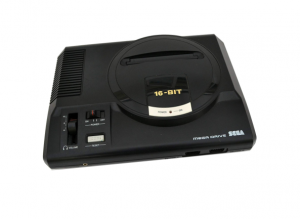
Development of the Jaguar began in the early 1990s, under the codename Project Jaguar. Atari partnered with Flare Technology, a group of engineers, to design the new hardware. The goal was clear: create a system powerful enough to surpass the Sega Genesis and Super Nintendo Entertainment System (SNES), and ideally challenge upcoming 32-bit consoles like the Sony PlayStation and Sega Saturn.
Atari’s engineers developed an innovative architecture:
- Two custom 32-bit processors, named “Tom” and “Jerry.” Tom handled graphics and video output, while Jerry focused on audio and co-processing tasks.
- A Motorola 68000 CPU, the same processor used in the Sega Genesis and Atari ST, primarily tasked with handling control logic and compatibility.
- Atari marketed the system as a “64-bit” console, arguing that the combined capabilities of the two 32-bit processors justified the label. This claim was heavily disputed, but Atari insisted the architecture offered genuine 64-bit performance.
The console used ROM cartridges for media, eschewing the CD-ROM trend, although a Jaguar CD peripheral would be released later.
Release and Market Launch
The Atari Jaguar was officially launched in November 1993 in select markets in the United States. Priced at $249.99, it was competitively priced compared to the SNES and Genesis. The initial rollout was limited, focusing on major urban centers before expanding nationally.
Atari heavily promoted the Jaguar’s “64-bit” architecture as its key differentiator. However, at launch, the Jaguar suffered from a critically small library of titles. The initial batch of games included:
- Cybermorph (bundled with the console)
- Trevor McFur in the Crescent Galaxy
- Raiden (an arcade port)
While Cybermorph demonstrated 3D graphics beyond what SNES and Genesis could produce, critics found the gameplay repetitive and the visuals unimpressive for a “next-gen” system.
Press Reception: Hype Meets Skepticism
The press initially covered the Jaguar with cautious optimism. Atari’s bold claims attracted attention, and the prospect of a “64-bit” console intrigued consumers in an industry dominated by 16-bit systems.
However, reviews quickly turned critical:
- The Jaguar’s unique architecture proved difficult to program. Developers often relied on the underpowered 68000 processor instead of exploiting the dual custom chips, leading to underwhelming performance.
- Game libraries remained thin, and key titles were delayed.
- The graphical leap was inconsistent: while 3D polygon graphics were possible, many games used 2D sprites, leading to comparisons with 16-bit systems rather than next-generation rivals.
Many reviewers began to view Atari’s “64-bit” claims as a marketing gimmick rather than a technological reality.
Despite an aggressive marketing campaign, the Jaguar struggled to gain traction:
- In 1993, only around 17,000 units were sold.
- By 1994, as availability expanded, sales increased, but not enough to challenge Nintendo or Sega.
- In total, Atari sold approximately 150,000 to 250,000 Jaguar units globally during its lifespan.
In comparison, the SNES and Genesis each sold tens of millions of units.
In an attempt to address the limitations of cartridge media, Atari released the Jaguar CD peripheral in 1995, priced at $149.99. This add-on allowed the Jaguar to play CD-based games and offered multimedia features like CD audio playback. By 1996, Atari ceased production of the Jaguar and effectively exited the hardware business. Facing mounting financial losses, Atari Corporation merged with hard drive manufacturer JT Storage (JTS), marking the end of Atari as an independent gaming company. In 1998, Hasbro Interactive acquired the rights to the Atari brand. In 1999, Hasbro officially declared the Jaguar an “open platform,” allowing developers to create and distribute new software without licensing restrictions. This led to a small but dedicated homebrew community.
The Atari Jaguar remains one of gaming history’s most infamous failures — a case study in overpromising and underdelivering. Yet, its story is more nuanced:
- Technologically, the Jaguar was ahead of its time in some respects, offering 3D graphics capability before the PlayStation and Saturn.
- Its complex architecture hindered software development, a fatal flaw that limited its library and stifled third-party support.
- Marketing missteps, poor game availability, and fierce competition doomed the console despite its potential.
Nevertheless, the Jaguar has earned a cult following among retro gaming enthusiasts. Titles like Tempest 2000, Alien vs. Predator, sekä Iron Soldier are fondly remembered as standouts on the platform.
The Atari Jaguar was both the final home console released by Atari and its final major attempt to reclaim its place in the gaming industry. Though it failed commercially, the Jaguar remains a testament to the company’s enduring spirit of innovation — even if that innovation was ultimately flawed. Today, the Jaguar symbolizes the end of an era. Atari, once a pioneer, exited the console market after the Jaguar’s failure, leaving the industry to companies like Sony, Nintendo, and Sega. But for a brief moment in the early 1990s,









 Suomi
Suomi  English (UK)
  Español