Atari enters to home computing markets:
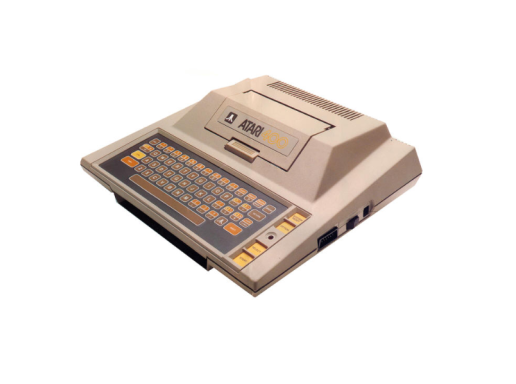
Introducing Atari 400
In 1979, Atari introduced the Atari 400, a home computer that would play a pivotal role in the early days of personal computing. Released alongside its sibling, the Atari 800, the 400 was designed as an approachable, family-friendly machine capable of gaming, education, and light productivity. While modest in specifications compared to later 16-bit systems, the Atari 400 represented a significant leap forward from early microcomputers, bringing color graphics, sound, and interactive software into the homes of a generation of users, including enthusiasts in USA and across Europe. The Atari 400 was powered by the MOS Technology 6502 CPU, running at 1.79 MHz, and offered 8 KB to 16 KB of RAM, expandable with cartridges. Graphics and sound were handled by custom co-processors: the CTIA/GTIA graphics chip provided sprite-based visuals, while the POKEY chip handled both sound generation and input devices. These dedicated chips allowed the 400 to deliver rich audiovisual experiences that set it apart from competitors, particularly in the realm of home gaming. The machine’s membrane keyboard, designed for durability and simplicity, made it approachable for children and novice users, though it was less comfortable for extended typing or programming sessions.
Gaming was a primary use for the Atari 400, and the system’s hardware capabilities enabled a wide range of experiences. Arcade-style titles, educational software, and text-based adventures all thrived on the 400’s platform. Developers leveraged the 400’s sprite graphics and sound capabilities to create engaging, visually appealing games that captivated users despite the machine’s limited memory. Finnish hobbyists and computer clubs embraced the Atari 400 for its ability to run both entertaining and educational programs, establishing it as a versatile machine for home use and early learning. One of the Atari 400’s strengths lay in its expandability and support for cartridges, which simplified software installation and expanded the machine’s capabilities. Users could insert cartridges for games, educational titles, or programming languages such as Atari BASIC, allowing immediate access without cumbersome tape or disk loading. The built-in BASIC interpreter encouraged experimentation and learning, enabling young users to create their own programs, explore computational logic, and develop problem-solving skills. This accessibility was key to the machine’s enduring appeal in both educational and hobbyist settings.
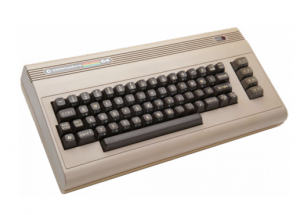
Despite its strengths, the Atari 400 had notable limitations. The membrane keyboard, while durable and child-friendly, was often criticized for its lack of tactile feedback, making extended typing or programming less comfortable. Its memory limitations constrained the complexity of software compared to machines like the Commodore 64, and early disk storage options were expensive and limited. Nevertheless, the 400’s affordability, simplicity, and rich audiovisual capabilities made it a strong entry-level home computer, especially for families and schools seeking an introduction to computing. Children, students, and hobbyists could explore programming, play games, and engage with technology in ways that were previously inaccessible. Its support for BASIC, along with a growing library of cartridges and educational titles, ensured that the 400 was not only entertaining but also a tool for skill development. Users could learn coding, experiment with graphics, and even begin designing games, fostering a generation of creative and technically literate individuals. Looking back, the Atari 400 represents a foundational moment in the evolution of personal computing. It combined approachability, audiovisual sophistication, and educational potential in a compact, affordable package, laying the groundwork for Atari’s subsequent 8-bit successes and influencing the home computer market broadly. Its impact extended beyond mere entertainment; it introduced users to programming, digital logic, and interactive software, shaping how a generation approached technology. The Atari 400 remains a symbol of early home computing innovation, a testament to the era when personal computers first entered living rooms and classrooms, inspiring creativity, learning, and imagination.








 Español
  English (UK)
  Suomi
Suomi