web analytics

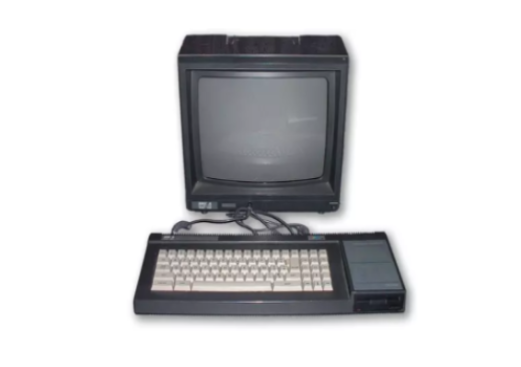
Atari 130XE

Kasibittisten lippulaiva Atarilla

1980-luvun kotitietokoneiden maailmassa harvat yritykset kokivat yhtä myrskyisän ja mullistavan historian kuin Atari. Vuonna 1972 perustettu Atari tunnettiin aluksi Pongin kaltaisten videopelien edelläkävijänä ja tuli synonyymiksi varhaiselle pelikulttuurille. 1980-luvun alkupuolella yrityksessä tapahtuneiden mullistusten jälkeen se kuitenkin kävi läpi radikaalin muutoksen. Tämä muutos johtui suurelta osin yhdestä miehestä: Jack Tramielista, Commodoren legendaarisesta perustajasta. Hänen ostamansa Atarin kuluttajatuoteryhmä vuonna 1984 merkitsi uutta lukua yrityksen historiassa, jossa keskityttiin edullisiin ja tehokkaisiin kotitietokoneisiin. Keskeistä tässä aikakaudessa oli Atari 130XE -tietokoneen julkaiseminen, joka ilmentää Tramielin filosofiaa tarjota jokamiesten tietokoneita, kuten hänen lanseeraamansa slogan oli ”computer for masses, not for the classess”. Jack Tramiel oli puolalaissyntyinen yrittäjä, joka rakensi Commodore Internationalista henkilökohtaisten tietokoneiden alan jättiläisen 1970-luvun lopulla ja 1980-luvun alussa.

Hänen aggressiiviset hinnoittelustrategiansa ja keskittyminen massamarkkinoiden vetovoimaan tekivät Commodore 64:stä kaikkien aikojen myydyimmän tietokoneen. Vuonna 1984, katkera riita Commodoren hallituksen kanssa, Tramiel jätti perustamansa yrityksen. Etsiessään tietä takaisin alalle hän tarttui tilaisuuteen, kun Atarin omistaja Warner Communications päätti myydä Atarin vaikeuksissa olevan kuluttajatuoteryhmän. Warner oli kärsinyt merkittäviä tappioita vuoden 1983 surullisenkuuluisan videopelikriisin jälkeen ja halusi päästä eroon vaikeuksissa olevasta laitteistoryhmästään. Heinäkuussa 1984 Jack Tramiel osti Atarin kuluttajaelektroniikka- ja kotitietokoneliiketoiminnan ja nimesi sen uudelleen Atari Corporationiksi. Hänen tavoitteensa oli selvä: tehdä Atarista uudelleen johtava ja innovatiivinen edullisten tietokoneiden valmistaja, joka voisi haastaa hänen vanhan yrityksensä Commodoren. Miltähän tuntuu olla tilanteessa, jossa yrität voittaa aiemmin perustamasi yrityksen? Voi vain kuvitella, miltä Tramielista on tuntunut. Aika pienet piirit olivat, sillä 1970-luvulla Applen perustaja Steve Jobs oli aloitellut uraansa Atarilla ja pian Atari kilpaili Applea vastaan Atari ST-tietokoneilla.

Tramielin johdolla Atari uudisti nopeasti tuotevalikoimansa. Vuonna 1985 Atari esitteli 130XE-mallin, joka oli osa uutta XE (XL Extended) -sarjaa 8-bittisiä tietokoneita, sekä 65XE-mallin ja pelaamiseen keskittyvän XEGS-mallin. Atari 130XE oli yhtiön huippuluokan 8-bittinen kotitietokone. Vaikka 130XE perustui teknisesti aikaisempaan Atari 800XL -malliin, siinä oli merkittäviä parannuksia:

  • 128 kt RAM-muistia, mikä on merkittävä parannus edeltäjänsä Atari 800:n 64 kt:n muistiin verrattuna.
  • Yhteensopivuus olemassa olevan Atari 8-bittisen ohjelmiston ja oheislaitteiden kanssa.
  • Samat edistykselliset grafiikka- ja äänitoiminnot, jotka olivat tehneet Atarin 8-bittisestä sarjasta kuuluisan, mukaan lukien ANTIC- ja GTIA-grafiikkapiirit sekä POKEY-äänipiiri.
  • Tuki koko 128 kt:n RAM-muistlle.

Suunnittelussa 130XE:ssä käytettiin tyylikkäämpää, modernisoitua koteloa, jonka värimaailma oli harmaa ja musta. Sen tarkoituksena oli merkitä irtautumista menneisyydestä ja sopia yhteen Atarin äskettäin lanseeraamien ST-tietokoneiden estetiikan kanssa. Atarin 8-bittiset tietokoneet olivat tunnettuja erinomaisesta grafiikasta ja äänestä, ja ne kilpailivat tai jopa ylittivät tietyillä alueilla aikansa kilpailijat, kuten Commodore 64:n. Suosittuja pelejä olivat esimerkiksi Star Raiders, Ballblazer, sekä Rescue on Fractalus! esitteli järjestelmän ominaisuudet. Koulut ja harrastajat arvostivat edelleen 8-bittisiä tietokoneita ohjelmoinnin ja perustaitojen opettamisessa. 130XE:n yhteensopivuus Atari BASICin kanssa ja sen laajennettavuus tekivät siitä houkuttelevan vaihtoehdon niin uusille kuin jo olemassa oleville käyttäjille. Laajennettu muisti mahdollisti edistyneempien ohjelmistojen, kuten tekstinkäsittely- ja taulukkolaskentaohjelmien käytön, joista monet olivat aiemmin toimineet huonosti 64 kt:n järjestelmissä. 130XE:n lisääntynyt RAM-muisti avasi mahdollisuuksia monimutkaisemmille ohjelmille, kotitekoisten ohjelmistojen kehittämiselle ja kokeellisille sovelluksille. Lisäksi aggressiivinen hinnoittelu ja laaja yhteensopivuus olemassa olevien ohjelmistojen ja oheislaitteiden kanssa tekivät 130XE:stä houkuttelevan päivitysvaihtoehdon vanhempien Atari 8-bittisten tietokoneiden omistajille.

Myyntimenestys markkinoilla

Atari 130XE:n tarkkoja myyntilukuja on vaikea määrittää, mutta arvioiden mukaan Atari Corporation myi satoja tuhansia yksiköitä maailmanlaajuisesti 1980-luvun loppupuolella. Vaikka 130XE ei saavuttanut Commodore 64:n suosiota, se vaikutti merkittävästi Atarin nousuun tietokonevalmistajana Tramielin johdolla. Yhdysvalloissa myynti oli vaatimatonta, mutta vakaata. Euroopassa, erityisesti Länsi-Saksassa, Ranskassa ja Isossa-Britanniassa, 130XE löysi innokkaamman markkinan kilpailukykyisen hinnoittelun ja Atarin vahvan bränditunnettuuden ansiosta.

Jack Tramielin Atarin ostaminen herätti huomattavaa mediahuomiota. Tietokonelehdet, kuten BYTE, Compute!, sekä Popular Computing Weekly raportoivat laajasti Atarin uudesta suunnasta. Tramielia kuvattiin usein kovana liikemiehenä, joka tunnettiin armottomista kustannussäästöistä ja kilpailuhenkisyydestään. Hänen johtamistyylinsä oli toisinaan kiistanalainen, mutta harvat epäilivät hänen kykyään elvyttää vaikeuksissa oleva yritys.

Alan lehdistö suhtautui 130XE-malliin yleisesti ottaen myönteisesti ja korosti seuraavia seikkoja:

  • The generous 128 KB of RAM.
  • Strong backward compatibility with earlier Atari 8-bit software.
  • Solid graphics and sound performance.
  • Competitive pricing under Tramiel’s aggressive business model.

Kriitikot kuitenkin huomauttivat, että 130XE, kuten muutkin tuon ajan 8-bittiset tietokoneet, alkoi tuntua vanhentuneelta verrattuna uudempiin 16-bittisiin koneisiin, kuten Atarin omaan 520ST:hen, joka myös julkaistiin vuonna 1985.

Vaikka Atari 130XE edusti Atarin 8-bittisten tietokoneiden huippua, koko ala kehittyi nopeasti. Edullisten 16-bittisten tietokoneiden, kuten Atari ST -sarjan ja Commodore Amigan, tulo markkinoille alkoi kiinnittää kuluttajien huomion ja syrjäyttää 8-bittiset järjestelmät. 1980-luvun loppupuolella Atari Corporation lopetti asteittain 8-bittisen XE-sarjan tuotannon keskittyäkseen 16-bittiseen ST-sarjaan, josta tuli Tramielin pääasiallinen painopiste. 130XE ja sen sisarmallit pysyivät kaupan hyllyillä 1990-luvun alkuun saakka, erityisesti Euroopassa, ennen kuin niiden tuotanto lopulta lopetettiin.

Perintö

Atari 130XE on mielenkiintoinen osa tietokoneiden historiaa. Vaikka se ei mullistanut markkinoita, se pidensi Atarin 8-bittisen alustan elinkaarta ja osoitti Jack Tramielin käytännönläheisen lähestymistavan tietotekniikkaan: tarjota tehokkaita ja edullisia koneita massamarkkinoille. Retrotietokoneiden harrastajat arvostavat 130XE:tä sen yhteensopivuuden ja tyylikkään muotoilun vuoksi. Se edustaa sekä Atarin 8-bittisten kotitietokoneiden aikakauden huipua että loppua – todisteena ajasta, jolloin Atari yritti määritellä itsensä uudelleen uuden johdon alaisuudessa. Loppujen lopuksi Atari 130XE oli vankka, suorituskykyinen kone, joka merkitsi yhden aikakauden loppua Atarille ja toisen alkua. Tramielin johdolla yritys oli siirtänyt painopisteensä pelikonsoleista tietokoneisiin. Vaikka 16-bittisten järjestelmien nousu lopulta syrjäytti XE-sarjan Atarin tuotevalikoimissa, niin silti 130XE on tärkeä luku Atarin historiassa. Se on symboli joustavuudesta ja uudistumisesta, joka saatiin nopeasti aikaan uuden johdon alaisuudessa Atarilla vuosina 1984-1985. Atarihan oli ollut vain pari vuotta aikaisemmin kriisiyhtiö, vaikka kriisiytymistä ennen oli Atari saanut jättimenestyksen Atari VCS 2600 -pelikonsolillaan.


Sinclair ZX-81

The £99 Revolution to homes:
Sinclair ZX80 & ZX81

In the late 1970s, as the personal computing revolution began to take shape, a British electronics firm known for calculators and audio equipment decided to enter a new frontier. Sinclair Radionics, under the leadership of Sir Clive Sinclair, transformed itself from a consumer electronics manufacturer into one of the most influential computer companies in the UK. This transformation led to the development of the ZX80 and ZX81 — two minimalist home computers that democratized computing for a generation. Sinclair Radionics, founded by Clive Sinclair in 1961, had built its reputation on affordable consumer electronics, including radios and pocket calculators. By the late 1970s, however, declining profits and intense competition in the calculator market forced Sinclair to seek new opportunities. Recognizing the potential of microcomputers, Clive Sinclair envisioned creating low-cost computers affordable enough for ordinary households. To realize this goal, he founded a new venture in 1979: Sinclair Research Ltd. This new company would focus exclusively on developing affordable personal computers, starting with what would become the ZX80.

Released in February 1980, the ZX80 was Britain’s first mass-market home computer and one of the first truly affordable personal computers in the world. It was named after the Z80 microprocessor (although technically it used a Z80-compatible NEC chip), which operated at 3.25 MHz. The ZX80 featured a mere 1 KB of RAM, though expansions up to 16 KB were available. It was revolutionary in its pricing: just £99.95 in kit form tai £119.95 assembled. For the first time, a computer was cheaper than many contemporary calculators or televisions, opening up ownership to hobbyists and families. The ZX80 had a distinctive white plastic case with a membrane keyboard — more like a touchpad than traditional keys — and connected to a household television for display. It output monochrome text and rudimentary block graphics using a resolution of 32 columns by 24 rows. Programs were stored on standard cassette tapes. Sinclair’s engineers achieved such affordability by minimizing components and omitting features standard in more expensive computers. Notably, the ZX80 lacked hardware-based floating-point math and relied entirely on software for graphical display. As a result, the screen blanked whenever the CPU was processing input or running a program — a quirk users quickly became familiar with. While the ZX80’s power was limited, it attracted significant attention in both the UK and US. Magazines like Practical Computing ja Your Computer praised it as a technological marvel, offering home computing at a previously unthinkable price point. Over 50,000 units of the ZX80 were sold before its successor was released — a significant figure for an early home computer, especially considering its lack of polish compared to more expensive rivals like the Apple II or Commodore PET.

The ZX81: Refining the Vision

Building on the success of the ZX80, Sinclair Research launched the ZX81 in March 1981. Retailing at £49.95 in kit form ja £69.95 assembled, the ZX81 was even cheaper than its predecessor — an extraordinary achievement considering its improved functionality.

The ZX81 maintained the same core Z80 processor and minimalist design but introduced several key enhancements:

  • A redesigned black plastic case.
  • Improved power efficiency, reducing chip count with a custom ULA (Uncommitted Logic Array).
  • Introduction of SLOW ja FAST display modes: in SLOW mode, the screen stayed visible during processing, albeit at reduced speed.
  • Floating-point math in BASIC, making calculations more practical.

With just 1 KB of onboard RAM, the ZX81 still relied on RAM packs for expansion, typically up to 16 KB. Programs were loaded from cassette tapes, and output remained black-and-white on a TV display.

Sales Success and Global Impact

The ZX81 was a phenomenal commercial success, selling around 1.5 million units worldwide. Sinclair marketed it effectively in both the UK and the United States, partnering with Timex to rebrand and distribute the ZX81 as the Timex Sinclair 1000 in North America.  In Britain, the ZX81 became many users’ first computer. Schools, hobbyists, and home users embraced the machine for programming in BASIC, gaming, and educational applications Throughout the early 1980s, Sinclair Research and Clive Sinclair himself gained significant media attention. Newspapers and magazines hailed Sinclair as a British innovator, likening him to Steve Jobs or Bill Gates. Nevertheless, the press agreed that Sinclair had transformed personal computing from a niche hobby into a mainstream phenomenon.

Kilpailijat

In the UK, the main competitors were:

  • Commodore VIC-20, offering color graphics and better sound.
  • BBC Micro, more powerful but significantly more expensive.
  • Atari 400/800 series, providing advanced graphics but at a premium price.

Despite these rivals, Sinclair’s aggressive pricing strategy ensured dominance in the low-cost segment.

Perintö

The ZX80 and ZX81 established Sinclair Research as Britain’s premier computer brand in the early 1980s. By breaking the price barrier, Sinclair introduced thousands of people to computing, many of whom went on to careers in the industry. These early machines paved the way for Sinclair’s most famous computer: the ZX Spectrum, released in 1982, which added color graphics and sound, solidifying Sinclair’s place in computing history. The ZX80 and ZX81 were not powerful or feature-rich computers, but they were revolutionary nonetheless. By focusing on cost and simplicity, Sinclair Research transformed the personal computer from an expensive luxury into a household device. Clive Sinclair’s vision and these two humble machines played a key role in bringing computing to the masses — making them icons in the history of technology.

Eventually, however, Sinclair’s fortunes faded. Intense competition from Commodore, Amstrad, and overseas manufacturers, combined with poor investments in other products (like the Sinclair C5 electric vehicle), led to financial trouble. In 1986, Sinclair’s computer business was sold to Amstrad.

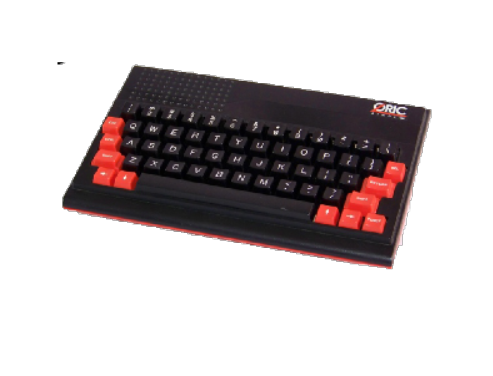
Oric-1

Britain’s Forgotten Home Computer Challenger

The Oric-1 was a British home computer launched in 1983 by Tangerine Computer Systems, aiming to capitalize on the rapidly growing 8-bit computer market dominated by the Sinclair ZX Spectrum. Designed as an affordable yet slightly more advanced alternative to Sinclair’s offerings, the Oric-1 blended accessible hardware with features meant to attract hobbyists, gamers, and educational users.

The Oric-1 was based on the MOS Technology 6502A processor, running at 1 MHz, paired with either 16 KB or 48 KB of RAM. Its display capabilities were modest but respectable for its price range: text modes of 28 or 40 columns and basic graphics up to 240×200 pixels, with support for 8 colors. Sound output was handled by the AY-3-8912 chip, offering 3-channel audio—superior to the beeper sound of the ZX Spectrum.

The machine featured a full QWERTY keyboard, though early users criticized its spongy, rubber-like keys. Storage was cassette-based, standard for the time, and the machine offered compatibility with standard televisions for display output.

Unveiled in early 1983, the Oric-1 quickly caught public attention thanks to its competitive pricing and the promise of being a step up from Sinclair’s popular Spectrum. The press response was mixed: while magazines like Your Computer praised its potential and colorful output, early models suffered from reliability issues and bugs in the ROM, which led to criticism in publications such as Popular Computing Weekly.

Despite these teething problems, Oric International (formed after Tangerine was restructured) reported strong initial sales. Approximately 160,000 Oric-1 units were sold in the UK alone during its first year, and total worldwide sales reached around 350,000 units. The Oric-1 targeted the home education and gaming markets. Users enjoyed a growing library of simple games, educational software, and programming tools in BASIC. Its 3-channel sound capabilities appealed to budding musicians and hobbyist programmers who wanted to explore digital audio beyond the Spectrum’s limitations.

Competition and Decline

The Oric-1’s main rivals were the Sinclair ZX Spectrum and the Commodore 64. The Spectrum’s lower price and extensive software library gave it a substantial advantage in the UK market. Meanwhile, the Commodore 64 dominated internationally thanks to its superior graphics and sound capabilities. Oric attempted to follow up with the Oric Atmos in 1984, which addressed many hardware flaws and improved the keyboard. However, increased competition and the failure to break into international markets limited the company’s success. Oric International eventually went bankrupt in 1987. Though ultimately overshadowed, the Oric-1 is remembered as an ambitious attempt to diversify the British home computer scene. Its combination of 6502-based processing, decent graphics, and advanced sound made it a solid entry-level machine that remains fondly remembered by retro computing enthusiasts today.


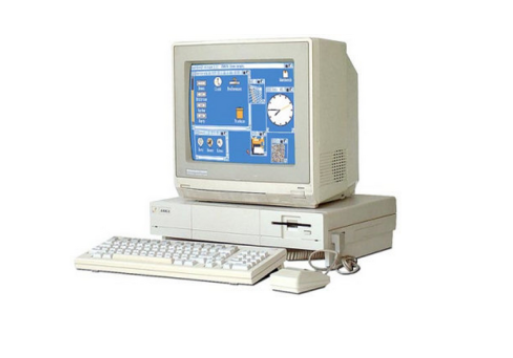
Commodore Amiga 1000

Commodore Amiga 1000:
Legendaarinen edelläkävijä

Vuonna 1985 julkaistu Commodore Amiga A1000 merkitsi vallankumouksellista harppausta henkilökohtaisessa tietojenkäsittelyssä. Amiga-tuoteperheen ensimmäisenä mallina A1000 esitteli uraauurtavia grafiikka-, ääni- ja moniajo-ominaisuuksia, jotka olivat vuosia aikaansa edellä. Amiga A1000:ta pidetään usein maailman ensimmäisenä todellisena multimediatietokoneena, ja sen tarina on sekä innovaatioiden että menetettyjen mahdollisuuksien tarina. Amiga A1000 oli tulosta Amiga Corporationin työstä, pienestä teknologiayrityksestä, jonka Jay Miner ja useat kollegansa, joista monet olivat aiemmin työskennelleet Atarilla, perustivat vuonna 1982. Alun perin yritys pyrki kehittämään seuraavan sukupolven pelikonsolin nimeltä Lorraine, mutta taloudelliset vaikeudet saivat Amiga Corporationin siirtämään painopisteensä täysimittaisen henkilökohtaisen tietokoneen luomiseen. Vuonna 1984 Commodore International tunnisti Amigan teknologian potentiaalin ja osti yrityksen. Commodore tarjosi tarvittavan taloudellisen tuen kehitystyön loppuun saattamiseksi ja Amiga-tietokoneen tuomiseen markkinoille. Amiga A1000:n ytimessä oli Motorola 68000 -prosessori, joka toimi 7,16 MHz:n (NTSC) tai 7,09 MHz:n (PAL) taajuudella. Siinä oli vakiona 256 kt RAM-muistia, jota voitiin laajentaa 512 kt:ksi tai enemmän sisäisillä ja ulkoisilla laajennuksilla. A1000 erottui kuitenkin muista sen mukautetulla piirisarjalla, joka tunnetaan nimellä Original Chip Set (OCS) ja joka koostui Agnus-, Denise- ja Paula-piireistä. Agnus hoiti suoran muistiyhteyden (DMA) ja ohjasi blitter- ja copper-apuprosessoreita nopeiden grafiikkatoimintojen toteuttamiseksi. Denise hallitsi videolähtöä, mahdollisti jopa 640×512 (interlaced) -resoluution ja näytti jopa 4096 väriä HAM (Hold-And-Modify) -tilassa. Paula hallitsi ääntä ja tuotti 4-kanavaista stereoääntä jopa 28 kHz:n laadulla, mikä oli huomattavasti parempi kuin PC:n piippaava äänigeneraattori ja se jopa kilpaili joidenkin erikoistuneiden musiikkisynteeslaitteiden kanssa. A1000 esitteli myös Amiga-käyttöjärjestelmän, joka yhdisti graafisen käyttöliittymän (Workbench) moniajo-ytimen (Exec) kanssa ja tarjosi ennakoivaa moniajoa aikana, jolloin useimmat henkilökohtaiset tietokoneet pystyivät suorittamaan vain yhden tehtävän kerrallaan.

Virallinen julkaisu vuonna 1985

Amiga A1000 esiteltiin virallisesti 23. heinäkuuta 1985 New Yorkin Lincoln Centerissä järjestetyssä korkean profiilin lanseeraustilaisuudessa. Kyseessä ei ollut tavallinen tuotejulkistus – Commodore halusi positioida Amigan paitsi tietokoneeksi myös luovuuden ja teknologisen edistyksen symboliksi. Kaksi populaarikulttuurin ikonia auttoi korostamaan Amigan luovia ominaisuuksia. Blondien laulaja Debbie Harry kutsuttiin esittelemään A1000:n graafisia mahdollisuuksia, kun Andy Warhol loi kuuluisan digitaalisen muotokuvan hänestä livenä lavalla käyttäen Amiga A1000:ta ja ProPaint-nimistä grafiikkaohjelmistoa. Warhol, joka oli jo tunnettu uusien teknologioiden hyödyntämisestä taiteessa, esitteli, kuinka A1000 voisi toimia modernien taiteilijoiden työkaluna. Tämä tapahtuma ei koskenut pelkästään laitteiston teknisiä ominaisuuksia, vaan Amigan asemoimista multimediatietokoneiden tulevaisuudeksi. Julkaisun yhteydessä Amiga A1000 sai erittäin positiivisia arvosteluja tietotekniikan lehdistöltä. Arvostelijat olivat hämmästyneitä sen multimediakyvykkyydestä ja ennakoivista moniajo-ominaisuuksista. Lehdet kuten Byte, InfoWorld ja Compute! korostivat A1000:n edistyksellistä arkkitehtuuria. Lehdistö kuitenkin huomautti myös A1000:n suhteellisen korkeasta hinnasta – noin 1 295 Yhdysvaltain dollaria perusmallille (ilman näyttöä tai lisämuistia). Tämä hinta asetti sen monien kotitietokoneiden yläpuolelle, mutta ammattikäyttöön tarkoitettujen työasemien, kuten Apple Macintosh tai IBM PC/AT, alapuolelle. Yksi innovatiivinen mutta epätavallinen ominaisuus oli ”kickstart”-ROM-järjestelmä. Toisin kuin useimmat tietokoneet, A1000 latasi osan käyttöjärjestelmästään levykkeeltä erityiseen 256 kt:n kirjoitettavaan muistiin joka kerta, kun se käynnistyi. Tämä mahdollisti helpot käyttöjärjestelmän päivitykset, mutta pidensi hieman laitteen käynnistysaikaa ja teki koneesta riippuvaisen Kickstart-levystä. Commodorella oli niin kiire julkaista uusi tietokone, että ensimmäinen Kickstart 1.1 oli pahasti keskeneräinen ja laitteenostajille lähetettiin päivitetty versio myöhemmin.

Kaupallinen menestys markkinoilla jäi vähäiseksi

Teknologisista vahvuuksistaan huolimatta Amiga A1000 kohtasi kaupallisia haasteita. Tarkat myyntiluvut ovat edelleen epäselvät, mutta arvioiden mukaan vuosina 1985–1987 valmistettiin maailmanlaajuisesti noin 150 000–200 000 kappaletta. Tämä teki siitä enemmän niche-tuotteen verrattuna Commodoren aikaisempaan menestykseen Commodore 64:n kanssa. Useat tekijät rajoittivat myyntiä, koska Commodore kamppaili A1000:n kohdeyleisön selkeän määrittelyn ja markkinoinnin kanssa, jääden kotitietokoneiden ja ammattimaisten työasemien markkinoiden väliin. Korkea alkuhinta karkotti keskivertokuluttajat. Commodoren markkinointiresurssit jakautuivat Amigan ja sen taantuvan 8-bittisen tuotevalikoiman välillä. Amiga A1000 kohtasi kilpailua usealta taholta. Apple Macintosh oli vahvalla jalansijallaan julkaisualalla jossa Mac oli tärkeä kilpailija luovien ammattilaisten markkinoilla, vaikka sillä ei ollut A1000:n multimediatehoa. IBM PC ja yhteensopivat tietokoneet, jokta PC-tietokoneet hallitsivat yrityssektoria ja tarjosivat tuttuutta ja laajennettavuutta, vaikka ne jäivätkin merkittävästi jälkeen grafiikka- ja äänitoiminnoissa. Atari ST julkaistiin vuonna 1985, vähän ennen A1000:n julkaisua, markkinoille tuodut Atari 520ST ja 1040ST tarjosivat samanlaisen 16/32-bittisen tehon edullisempaan hintaan, ja sisäänrakennetut MIDI-portit tekivät ST:stä suositun muusikoiden keskuudessa. Ironista kyllä, Atari kehitti Atari ST:n sen jälkeen, kun Jay Minerin entiset kollegat Amigalla olivat lähteneet yrityksestä, mikä teki siitä suoran kilpailijan. Amiga A1000:n tuotanto päättyi vuonna 1987, kun Commodore siirtyi keskittymään edullisempaan Amiga 500:aan ja ammattitason Amiga 2000:aan. Nämä mallit saavuttivat laajemman yleisön, ja A500 tuli erityisen suosituksi kotikäyttäjien ja pelaajien keskuudessa. Vaikka A1000:n tuotanto lopetettiin, sen teknologiset innovaatiot loivat perustan koko Amiga-alustalle, joka menestyi 1980-luvun lopulla ja 1990-luvun alussa. Nykyään A1000:ta pidetään keräilykohteena ja symbolina siitä, mitä olisi voinut olla, jos Commodore olisi markkinoinut ja kehittänyt alustaa tehokkaammin.

Commodore Amiga A1000 on merkkipaalu henkilökohtaisten tietokoneiden historiassa. Sen uraauurtava multimedia-arkkitehtuuri avasi tien modernille digitaaliselle sisällöntuotannolle ja interaktiiviselle viihteelle. Vaikka A1000 ei ollut kaupallinen menestys, se synnytti intohimoisen yhteisön, joka piti Amiga-alustan hengissä vielä kauan Commodoren lopullisen konkurssin jälkeen vuonna 1994. Monille harrastajille ja historioitsijoille A1000 edustaa hetkeä, jolloin tietokoneet lakkasivat olemasta pelkkiä toimistokoneita ja alkoivat muuttua luoviksi työkaluiksi – koneiksi, joita ei käytetty vain työhön, vaan myös taiteeseen.

Atari 1040 ST

Power without the price

Vuonna 1986 markkinoille tuotu Atari 1040ST oli suosittu 16-bittinen kotitietokone, joka tunnettiin edullisuudestaan sekä edistyneestä grafiikasta ja äänestä. Se toimi 8 MHz:n Motorola 68000 -prosessorilla ja siinä oli 1 Mt RAM-muistia. Sisäänrakennettujen MIDI-porttien ansiosta sitä käytettiin laajalti musiikin tuotantoon. Commodore Amigan kanssa kilpaillut 1040ST sai kiitosta nopeasta graafisesta käyttöliittymästään ja tuottavuusohjelmistoistaan, ja siitä tuli 1980-luvun lopulla suosikki muusikoiden ja harrastajien keskuudessa.

Vuonna 1986 Atari aloitti Atari 1040ST:n markkinoinnin. Kyseessä oli kotitietokone, joka tuli määrittämään 16-bittisen tietotekniikan sukupolven Euroopassa. 1040ST oli tehokas mutta edullinen vaihtoehto Commodore Amigalle ja IBM-yhteensopiville tietokoneille, se erottui kilpaillulla markkinalla yhdistelmällä prosessointitehoa, grafiikkakapasiteettia ja multimediamahdollisuuksia. Sen esittely merkitsi merkittävää askelta eteenpäin Atarin aikaisemmista 8-bittisistä tietokoneista ja osoitti, kuinka henkilökohtainen tietotekniikka voi olla sekä helposti saatavilla että teknisesti kehittynyttä. 1040ST:n ytimessä oli 8 MHz:n taajuudella toimiva Motorola 68000 -prosessori, johon oli yhdistetty 1 Mt RAM-muistia – vaikuttava kokoonpano kotitietokoneeksi tuohon aikaan (1986). Järjestelmä tuki korkean resoluution mustavalko- ja väri-grafiikkaa, resoluutiolla jopa 640×400 mustavalkoisena ja 320×200 värillisenä, mikä teki siitä sopivan sekä pelaamiseen että ammattikäyttöön. Toisin kuin monet muut saman aikakauden tietokoneet, 1040ST:ssä oli sisäänrakennettu MIDI-liitäntä, mikä teki siitä nopeasti suosikin muusikoiden ja studioiden keskuudessa ja osoitti Atarin kaukonäköisyyden tietotekniikan ja luovan työn lähentymisen tunnistamisessa. Tehokkuuden, laajennettavuuden ja edullisuuden yhdistelmä teki 1040ST:stä monipuolisen koneen harrastajille, opettajille ja ammattilaisille.

Yksi Atari 1040ST:n houkuttelevimmista ominaisuuksista oli sen sopusuhtaisuus teknisen kehittyneisyyden ja käyttäjäystävällisyyden välillä. Koneessa oli TOS-käyttöjärjestelmä (The Operating System) ja GEM-graafinen käyttöliittymä, jotka tarjosivat intuitiivisen ympäristön käyttäjille, jotka siirtyivät 8-bittisistä tietokoneista tai varhaisista DOS-koneista. Pelaajille 1040ST tarkoitti alati kasvavaa pelivalikoimaa, joka hyödynsi sen grafiikka- ja äänitoimintoja. Kehittäjät pystyivät hyödyntämään laitteiston täysimääräisesti luodakseen mukaansatempaavia kokemuksia, jotka kilpailivat kalliimpien järjestelmien kanssa, arcade-tyylisistä toimintapeleistä monimutkaisiin strategiapeleihin. Käyttäjät arvostivat laitteen kykyä hoitaa sekä työ- että pelitehtäviä, mikä teki siitä todellisen all-in-one-ratkaisun kotitietokoneeksi. 1040ST:n vaikutus ulottui paljon pelien ulkopuolelle. Sen MIDI-ominaisuudet ja suhteellisen alhainen hinta tekivät siitä standardin pienissä musiikkistudioissa, oppilaitoksissa ja multimedialaboratorioissa. Muusikot pystyivät liittämään näppäimistöt, syntetisaattorit ja sekvensserit suoraan tietokoneeseen ja käyttämään ohjelmistoja sävellykseen ja esityksiin – mikä oli 1980-luvun puolivälissä merkittävä ominaisuus. Etenkin Euroopassa tämä ominaisuus tutustutti monet käyttäjät digitaaliseen musiikkituotantoon, mikä edisti sekä luovuutta että teknisiä taitoja. Tehokkaan laitteiston, laajennettavuuden ja sisäänrakennettujen liitäntöjen yhdistelmä auttoi 1040ST:tä vakiinnuttamaan asemansa kuluttajatietokoneiden ja ammattimaisen luovan työn välisenä siltana. Monista vahvuuksistaan huolimatta Monista vahvuuksistaan huolimatta Atari 1040ST kohtasi haasteita. Vaikka se oli edullisempi kuin Commodore Amiga, siitä puuttui osa kilpailijansa edistyneistä grafiikka- ja äänitoiminnoista, erityisesti demoissa ja peleissä. Sen suorituskyky, erityisesti tuottavuus- ja musiikkisovelluksissa, kuitenkin usein kompensoi nämä rajoitukset. Sen vaikutusta Euroopan tietokonemarkkinoihin ei voi yliarvioida; se auttoi luomaan standardin keskitason kotitietokoneiden suorituskyvylle ja inspiroi sukupolven käyttäjiä tutkimaan sekä ohjelmointia että luovia ohjelmistoja. Atari ST oli etenkin saksankielisillä markkinoilla huippusuosittu, joka näkyy edelleenkin sen ohjelmistotarjonnassa.

Jälkikäteen tarkasteltuna Atari 1040ST edustaa käännekohtaa henkilökohtaisten tietokoneiden kehityksessä. Se yhdisti 16-bittisen prosessointitehon, ammattitason multimediatuen ja käyttäjäystävällisyyden edulliseen ja monipuoliseen pakettiin. Suomalaiset tietokoneharrastajat, muusikot ja harrastajat ottivat sen omakseen koneena, joka pystyi hoitamaan monenlaisia tehtäviä peleistä ja ohjelmoinnista musiikin säveltämiseen ja grafiikkatöihin. 1040ST:n perintö näkyy paitsi sen laitteistossa myös sen vaikutuksessa luovaan ja tekniseen käyttäjäpolveen, joka tutustui tietotekniikkaan sen helppokäyttöisen mutta kehittyneen alustan kautta. Viime kädessä Atari 1040ST on todiste tietotekniikan historiasta, jossa innovaatio, monipuolisuus ja käyttäjien sitoutuminen yhdistyvät. Se oli kone, joka viihdytti, opetti ja inspiroi, ja se siltoi harrastelijoiden kokeilujen ja ammattilaisten luovuuden välisen kuilun. Sen kestävä vetovoima piilee sen kyvyssä yhdistää teho ja helppokäyttöisyys, mikä osoitti, että kotitietokone voi olla sekä työväline että mielikuvituksen lähde – perintö, joka resonoi edelleen harrastajien ja retrotietokoneiden ystävien keskuudessa ympäri maailmaa.

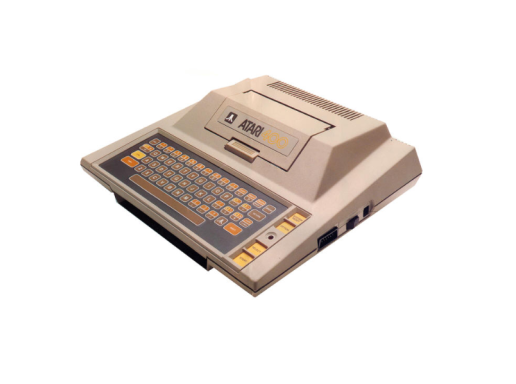
Atari 400

Atarin ensiaskeleet tietokonemarkkinoilla:
Esittelyssä Atari 400 vuodelta 1979

Vuonna 1979 Atari esitteli kotitietokoneen Atari 400, jolla oli edelläkävijän rooli koteihin suunnattujen tietokoneiden alkuaikoina. Atari 800:n rinnalla julkaistu 400 oli suunniteltu helppokäyttöiseksi, perheystävälliseksi koneeksi, jota voitiin käyttää pelaamiseen, opiskeluun ja kevyeen tuottavuuteen. Vaikka Atari 400:n tekniset ominaisuudet olivat vaatimattomat verrattuna myöhempiin 16-bittisiin järjestelmiin, se oli merkittävä harppaus eteenpäin varhaisista mikrotietokoneista, tuoden värigrafiikan, äänen ja monipuoliset ohjelmiston kotikäyttöön.Atari 400:ssa oli MOS Technology 6502 -prosessori, joka toimi 1,79 MHz:n taajuudella, ja se tarjosi 8–16kt RAM-muistia, jota voitiin laajentaa. Grafiikasta ja äänestä huolehtivat räätälöidyt apuprosessorit: CTIA/GTIA-grafiikkapiiri tarjosi sprite-pohjaisen grafiikan, kun taas POKEY-piiri hoiti sekä äänen tuottamisen että syöttölaitteet. Nämä piirisarjat mahdollistivat Atari 400:n tarjoavan hienon audiovisuaalisen kokemuksen, joka erotti Atarin sen aikaisista kilpailijoista. Erityisesti pelikäytössä Atarin kasibittiset tietokoneet olivat hyviä ja saavuttivat menestystä. Atari 400- mallissa oli kalvonäppäimistö, se oli suunniteltu kestäväksi ja yksinkertaiseksi. Tällainen näppäimistö teki siitä helppokäyttöisen lapsille ja aloitteleville käyttäjille, vaikka se olikin vähemmän mukava pitkäkestoisessa kirjoittamisessa tai ohjelmoinnissa. Sanottiin, että siihen voi kaatua vaikka kuppi kahvia tai mehua, ja tietokone ei menisi siitä rikki.

Pelaaminen oli Atari 400:n pääasiallinen käyttötarkoitus, ja järjestelmän tekninen kapasiteetti mahdollisti monenlaisia asioita. Arcade-tyyliset pelit, apuvälineet ohjelmointiin ja tekstipohjaiset seikkailupelit menestyivät kaikki 400:n alustalla. Kehittäjät hyödynsivät 400:n grafiikkaa ja äänikapasiteettia luodakseen kiinnostavia, visuaalisesti houkuttelevia pelejä, jotka kiehtoivat käyttäjiä koneen rajallisesta muistista huolimatta. Harrastajat ja tietokonekerhot ottivat Atari 400:n avosylin vastaan, koska se pystyi ajamaan sekä viihde- että opetusohjelmia, mikä teki siitä monipuolisen koneen kotikäyttöön ja varhaiseen oppimiseen. Yksi Atari 400:n vahvuuksista oli sen laajennettavuus ja tuki moduuleille, mikä yksinkertaisti ohjelmistojen asennusta ja laajensi koneen ominaisuuksia. Käyttäjät pystyivät ottamaan käyttöön helposti erilaisia pelejä, hyötyohjelmia tai ohjelmointikieliä, kuten Atari BASIC esimerkiksi. Ne olivat heti käytettävissä ilman hankalaa nauhan tai levyn lataamista. Sisäänrakennettu BASIC-tulkki kannusti kokeilemaan ja oppimaan, jolloin laitteen käyttäjät pystyivät luomaan omia ohjelmia, tutkia logiikkaa ja kehittää omia ongelmanratkaisutaitoja Atarin avulla. Tämä helppokäyttöisyys oli avaintekijä kasibittisten atarien pitkäaikaiselle suosiolle sekä viihde- että harrastuskäytössä.

Vahvuuksistaan huolimatta Atari 400:lla oli myös rajoituksia. Kalvokäyttöinen näppäimistö oli kestävä ja lapsille sopiva, mutta sitä kritisoitiin usein sen kosketuspalautteen puutteesta, mikä teki pitkäkestoisesta kirjoittamisesta tai ohjelmoinnista vähemmän mukavaa. Sen muistin rajoitukset rajoittivat ohjelmistojen monimutkaisuutta verrattuna Commodore 64:n kaltaisiin koneisiin, ja varhaiset levytallennusvaihtoehdot olivat kalliita ja rajallisia. Tästä huolimatta Atari 400 -mallin yksinkertaisuus ja kehittyneet ääni- ja grafiikkaominaisuudet tekivät siitä varteenotettavan vaihtoehdon kotitietokoneeksi, heille jotka halusivat tutustua tietotekniikkaan. Laitteen avulla pystyttiin tutustumaan ohjelmointiin, pelaamaan pelejä ja käyttämään teknologiaa tavoilla, jotka olivat vain hetkeä aiemmin olleet mahdottomia. BASIC-tuki sekä kasvava kasettien ja oppimateriaalien valikoima varmistivat, että 400 oli paitsi viihdyttävä myös taitojen kehittämisen työkalu. Käyttäjät pystyivät oppimaan koodaamista, kokeilemaan grafiikkaa ja jopa aloittamaan pelien suunnittelun, mikä kasvatti luovan ja teknisesti osaavan sukupolven. Takautuvasti tarkasteltuna Atari 400 edustaa perustavaa hetkeä henkilökohtaisten tietokoneiden kehityksessä. Se yhdisti helppokäyttöisyyden, audiovisuaalisen hienostuneisuuden ja opetuksellisen potentiaalin kompaktissa, edullisessa paketissa, luoden pohjan Atarin myöhemmille 8-bittisille menestyksille ja vaikuttamalla laajasti kotitietokonemarkkinoihin. Atarin kasibittisen tietokonemallisto sai loppunsa vasta 1990-luvulla, harva tietokonesarja elää lähes muuttumattomana noin pitkään. Edes Commodore 64:n elinkaari (1992-1994) ei ollut noin pitkä kuin Atarin kasibittisillä (1979-1993). Jälkikäteen tarkasteltuna Atari 400 edustaa perustavaa laatua olevaa hetkeä henkilökohtaisten tietokoneiden kehityksessä. Se yhdisti helppokäyttöisyyden, audiovisuaalisen hienostuneisuuden ja ohjelmistokehityksen potentiaalin kompaktissa, edullisessa paketissa, luoden pohjan Atarin myöhemmille 8-bittisille menestyksille ja vaikuttamalla laajasti kotitietokonemarkkinoihin. Sen vaikutus ulottui pelkkää viihdettä pidemmälle; se tutustutti käyttäjät ohjelmointiin, digitaaliseen logiikkaan ja interaktiiviseen ohjelmistoon, muovaillen koko sukupolven suhtautumista teknologiaan. Atari 400 on edelleen symboli varhaisesta kotitietokoneiden innovaatiosta, todiste aikakaudesta, jolloin henkilökohtaiset tietokoneet tulivat ensimmäistä kertaa olohuoneisiin ja luokkahuoneisiin inspiroiden luovuutta, oppimista ja mielikuvitusta. Ja onhan itse laitekin upean näköinen. Se kuuluu itseoikeutetusti I love 8-bit® -kokoelmaan.


Oric Atmos

The forgotten 8-bit hero:
The Oric Atmos

In the early 1980s, the home computer market in Europe was booming, with machines like the ZX Spectrum, Commodore 64, and BBC Micro capturing the imagination of hobbyists and families. Among these, the Oric Atmos, released in 1984 by Oric Products International, represented a unique and ambitious effort to bring advanced computing to a wide audience at an affordable price. Designed as an improvement over the earlier Oric-1, the Atmos combined enhanced reliability, improved hardware, and a more comfortable user experience, aiming to carve out a niche in an increasingly competitive market. At its core, the Oric Atmos featured a 6502-compatible CPU, running at 1 MHz, with 48 KB of RAM, allowing for sophisticated software and game development for its time. One of its notable improvements over the Oric-1 was a full-stroke keyboard, replacing the original’s less user-friendly design, which made programming and typing more comfortable for both beginners and advanced users. The machine offered color graphics with a resolution of 240×200 pixels and eight colors, as well as simple sound capabilities through its built-in speaker. While not as powerful as some of its contemporaries, the Atmos provided a balanced and approachable platform for education, gaming, and programming.

Gaming was a central feature of the Oric Atmos experience. The machine supported a wide range of titles, from arcade-style action games to adventure and puzzle games, many of which were developed by enthusiastic hobbyists and small studios. The users, along with players across Europe, appreciated the variety and creativity found in the Atmos game library, despite the machine’s relatively limited graphics and sound capabilities. Developers learned to optimize memory and graphical resources, often producing games that were surprisingly complex given the hardware constraints. The Oric Atmos also excelled as an educational tool. Its built-in BASIC interpreter enabled users to write their own programs, experiment with algorithms, and create simple games or applications. Schools and computing clubs in some European countries adopted the Atmos as a way to introduce students to programming and computational thinking. The combination of an accessible keyboard, user-friendly interface, and educational software made it a practical choice for parents seeking to provide children with both entertainment and learning opportunities.

One of the defining characteristics of the Oric Atmos was its balance between affordability and capability. While the Commodore 64 and ZX Spectrum offered more advanced graphics or sound, the Atmos was cheaper and easier to operate, which appealed to budget-conscious consumers. Its compact design, reliability, and straightforward operation meant that it could fit comfortably into homes and classrooms, providing a complete computing experience without the steep learning curve of more complex systems. Despite its strengths, the Oric Atmos faced stiff competition. The home computer market in 1984 was crowded, and machines like the ZX Spectrum, Commodore 64, and later the Atari 600XL series offered broader software libraries and more advanced multimedia capabilities. These factors limited the commercial success of the Atmos, and production eventually ceased in the late 1980s. Nevertheless, the machine left a lasting legacy, particularly among hobbyists and collectors who value its role in democratizing computing and providing an approachable entry point into programming and gaming. In retrospect, the Oric Atmos represents a significant chapter in the history of home computing. It combined usability, affordability, and versatility in a package that was both educational and entertaining. The enthusiasts remember the Atmos not only for its games and software but also for its role in inspiring a generation to explore programming, problem-solving, and creativity. Though overshadowed by some of its contemporaries, the Oric Atmos remains a symbol of the early home computing era, reflecting the innovation, ambition, and accessibility that defined the 1980s personal computer revolution.

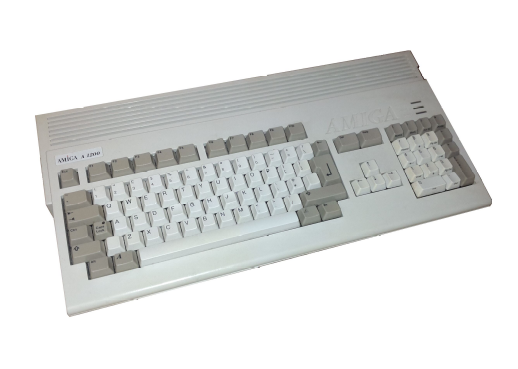
Commodore Amiga 1200

The Last effort
in Commodore’s Legendary Computer Journey

The Commodore Amiga A1200, launched in October 1992, represented both the technological culmination of the original Amiga line and the beginning of its decline. Designed as a successor to the popular Amiga 500 and 600 models, the A1200 sought to modernize the Amiga platform for a new generation of users amidst rapidly evolving competition. Featuring advanced graphics, sound, and processing capabilities, it remained a beloved machine among enthusiasts, even as the broader computing market moved in new directions. The Amiga A1200 was built around the Motorola 68EC020 processor, a 32-bit CPU running at 14 MHz. This was a significant upgrade from the Motorola 68000 processor found in earlier Amiga models like the A500. The 68EC020 delivered greater computing power and a wider address bus, allowing for the management of larger memory spaces and more advanced operations.

One of the A1200’s headline features was its Advanced Graphics Architecture (AGA) chipset. This marked the final evolution of Amiga’s custom chipset technology, capable of displaying up to 16.8 million colors (with 256 colors on-screen in standard modes and 262,144 in HAM-8 mode). The AGA chipset also improved the handling of sprites and scrolling, which had long been strengths of the Amiga platform. Out of the box, the A1200 included 2 MB of Chip RAM (shared memory between the CPU and graphics subsystem), expandable through additional Fast RAM upgrades. Storage was provided via a built-in 3.5-inch floppy disk drive, but users could install an internal 2.5-inch IDE hard drive — a notable advancement compared to earlier Amiga models which required external hard drives. Physically, the A1200 retained the all-in-one keyboard form factor popularized by the Amiga 500. Its white plastic casing housed both the motherboard and keyboard, making it compact and practical for home use.

Release and Market Positioning

Commodore released the Amiga A1200 in October 1992, pricing it competitively against both IBM PC clones and home gaming consoles. However, the A1200 arrived during a turbulent period in Commodore’s history. The company was facing financial difficulties, and the broader personal computer market was shifting toward PC compatibles running MS-DOS and Windows. Despite these challenges, the A1200 was initially well-received, particularly in Europe, where the Amiga platform had traditionally enjoyed stronger market presence than in the United States. The A1200 was intended to appeal to both existing Amiga fans and new users looking for a powerful multimedia-capable computer at an affordable price. Few hundred thousands units of the Amiga A1200 were sold worldwide during its commercial lifespan. This figure, while respectable, was considerably lower than sales figures for earlier models like the Amiga 500, which sold approximately five million units. Commodore’s financial instability and the shift in consumer preferences toward IBM-compatible PCs heavily impacted the A1200’s potential market penetration.

The Amiga A1200 was designed as both a home computer and a multimedia workstation. Many users used it for gaming, enjoying its advanced graphics and sound capabilities. Popular game genres on the A1200 included platformers, strategy games, and simulations, with titles such as “Alien Breed,” “Sensible Soccer,” and “Worms” making full use of the hardware. However, the A1200 was also a competent productivity machine. It was used for digital art, music production, desktop publishing, and video titling. Programs like Deluxe Paint IV AGA, OctaMED, and Scala Multimedia helped creative users unlock the potential of the A1200. The inclusion of an IDE hard drive option made it easier to manage larger files and more complex projects compared to floppy-based systems.

Upon release, the Amiga A1200 garnered positive reviews from the computing press. Critics praised the system’s AGA graphics, noting the significant improvements over the earlier ECS chipset. Publications like Amiga Format, CU Amiga, and Amiga Power praised the machine as a cost-effective multimedia platform. However, some criticism was leveled at Commodore for not going far enough in modernizing the platform. Reviewers noted that while the AGA chipset was a step forward, it failed to match the groundbreaking leap that the original Amiga 1000 had represented in 1985. Competitors in the PC market were beginning to adopt SVGA graphics cards capable of higher resolutions and color depths, and the A1200’s 14 MHz processor felt underpowered against increasingly common 486 and early Pentium Pcs.

The End of Commodore and the A1200’s Legacy

By 1992, the A1200 faced stiff competition from several fronts. In the gaming space, the rise of 16-bit consoles like the Super Nintendo and Sega Mega Drive (Genesis) eroded the Amiga’s position as the home gaming system of choice. These consoles offered dedicated gaming hardware, large libraries of high-quality titles, and aggressive marketing. In the personal computing sector, IBM-compatible PCs running DOS and Windows 3.1 dominated the professional and home office markets. PCs were becoming more affordable, and their modular, open architecture allowed for continual hardware upgrades — something the Amiga platform struggled to match. Apple’s Macintosh computers also competed for the creative professional market, with their strong desktop publishing software and widespread adoption in educational environments. Despite the A1200’s technical merits, Commodore’s declining financial health sealed its fate. In April 1994, just under two years after the A1200’s launch, Commodore International filed for bankruptcy. Production of the A1200 ceased shortly thereafter, although existing stock continued to be sold for some time. Following Commodore’s collapse, the Amiga brand passed through multiple owners, including Escom, Gateway 2000, and later various smaller firms attempting to revive the platform. Escom briefly re-released the A1200 in 1995, but with limited success due to high pricing and outdated hardware.

Today, the Amiga A1200 enjoys a cult following. Retro computing enthusiasts continue to restore, modify, and upgrade their A1200s. Modern expansions, including accelerator cards, CompactFlash storage adapters, HDMI video output solutions, and even network interfaces, allow A1200s to operate in today’s digital landscape. The A1200 is remembered as the last major traditional Amiga model before Commodore’s demise — a machine that, while not revolutionary, embodied the strengths of the Amiga platform: multimedia excellence, creative flexibility, and a passionate user base.


Amstrad CPC6128

The Ultimate 8-Bit 128kb Experience:
Amstrad CPC6128

The Amstrad CPC (Colour Personal Computer) was a popular home computer in the 1980s that offered users a comprehensive IT package. It was developed by the British company Amstrad, led by Alan Sugar. The CPC range quickly became a success, particularly in Europe, thanks to its ease of use, competitive price, and versatile features. The CPC series included several models that met the different needs of users, whether for programming, gaming, or office work. The Amstrad CPC was launched in 1984 and continued to be manufactured until 1990. The devices were mainly manufactured in the UK, but production later expanded to other countries, such as Asia, to reduce costs. Approximately 3 million CPCs were sold worldwide, making it a significant competitor to the most popular home computers of the time, such as the Commodore 64 and ZX Spectrum.

Most sales took place in Europe, particularly in the United Kingdom, France, Germany, and Spain. The CPC was particularly popular in France, where it achieved an even larger market share than the Commodore 64. In Finland, the Amstrad CPC was not as well known as in its main European markets, but it was sold to some extent through local retailers. In Finland, the device attracted gamers and technically oriented enthusiasts in particular. The Amstrad CPC’s greatest strength was its competitive price and package solution. For example, the CPC 464 model launched in 1984 cost around £250, and the price included the computer, an integrated C cassette drive, and a color monitor (or a black-and-white monitor in a cheaper package). This made it an attractive option, as many competitors, such as the Commodore 64, required the purchase of a separate monitor or television. In Finland, CPC prices varied, but import costs made them higher than the models sold in the UK, for example. Amstrad aggressively marketed the CPC to families, students, and small businesses. The company advertised the device as a user-friendly total solution that did not require separate accessories or complex connections.

Production of the Amstrad CPC ended in 1990, when the home computer market began to shift towards PCs and game consoles. However, the legacy of the CPC lives on, and its position at the heart of the European home computer revolution of the 1980s is undisputed. For many users, the CPC was their first contact with information technology and programming, and it was also the starting point for the careers of many game developers. In its day, the Amstrad CPC was a revolutionary home computer that combined efficiency, usability, and affordability. Although it did not achieve the same global popularity as the Commodore 64 or ZX Spectrum, its impact, especially in the European market, was significant. In Finland, the CPC remained a minor phenomenon, but the device is still remembered as one of the most important home computers of the 1980s.

Atari 2600 VCS

 The console that changed gaming forever

In 1977, Atari introduced the Video Computer System (VCS), later widely known as the Atari 2600, a home video game console that would fundamentally reshape the gaming industry and set the standard for decades to come. Unlike earlier dedicated consoles, which came preloaded with a fixed set of games, the Atari VCS introduced the groundbreaking concept of interchangeable game cartridges, allowing users to expand their library at will. This innovation not only revolutionized the business model of home video gaming but also laid the foundation for the modern game industry, establishing principles of software licensing, third-party development, and consumer choice that continue to influence the market today.

At its core, the Atari VCS was a relatively modest machine, powered by a MOS Technology 6507 CPU running at 1.19 MHz, with a mere 128 bytes of RAM. Its TIA (Television Interface Adapter) handled graphics and sound, offering low-resolution visuals and simple audio capabilities by modern standards. Yet these constraints became a canvas for creativity. Developers learned to maximize the hardware, producing games that were simple in presentation but engaging and addictive in play. The introduction of cartridges allowed for a staggering variety of games, from Space Invaders and Pac-Man to original Atari titles like Adventure and Pitfall!, each pushing the limits of the system in unique ways. The significance of the Atari VCS goes beyond its technical specifications. It popularized video gaming as a home entertainment medium, transforming the living room into an interactive playground. Families could now share experiences, compete, and explore new worlds through a television screen. The ability to purchase new cartridges meant that the console had longevity and adaptability, distinguishing it from earlier “dedicated” systems and fostering an entire ecosystem of software development. Third-party companies, inspired by the success of Atari’s cartridge model, entered the market, leading to a rapid expansion of the industry and, eventually, the diversification of game genres and experiences.

The Atari VCS quickly became a symbol of modern entertainment. Its relatively low cost, compared to early computers, and ease of use made it accessible to young audiences, while parents appreciated its straightforward setup and the sense of engagement it fostered. Magazines and hobbyist communities grew around the console, providing reviews, tips, and programming insights for those who wanted to delve deeper. The VCS inspired a generation of players who would later become programmers, designers, and creative professionals, highlighting its cultural as well as technological impact. The Atari VCS also reshaped industry economics. The cartridge-based model created new revenue streams for Atari and set a precedent for intellectual property licensing. Unlike preloaded consoles, which limited revenue to hardware sales, the VCS allowed Atari to profit continuously as users purchased additional games. This approach incentivized both Atari and third-party developers to innovate, expanding the market and creating an enduring business model that remains at the core of the gaming industry. It also introduced the concept of collectibility, as rare or high-demand cartridges became desirable items, a phenomenon that persists among retro gaming enthusiasts today.

Despite its success, the VCS faced challenges. Its limited hardware imposed design constraints, often resulting in games with simple graphics and repetitive gameplay. The early 1980s saw a flood of low-quality titles, contributing to the video game crash of 1983 in North America. Yet, the VCS’s legacy endured because of its foundational innovations. By emphasizing interchangeable software, third-party development, and home accessibility, Atari had created a model that could evolve with technology, influencing the design of future consoles from Nintendo, Sega, and Sony. Fast forward to the 2020s, and the Atari VCS continues to be relevant, both as a nostalgic icon and as a modernized platform. Recent iterations of the Atari VCS hardware combine retro design with contemporary technology, including streaming capabilities, modern graphics support, and access to both classic Atari titles and new indie games. This demonstrates the console’s enduring adaptability: the fundamental appeal of cartridge-based or modular game access remains relevant in an era dominated by digital distribution. The modern Atari VCS serves as a bridge between the origins of home video gaming and today’s diverse gaming ecosystem, appealing to collectors, retro enthusiasts, and new audiences alike.

From a historical perspective, the Atari VCS exemplifies how a single technological innovation—the interchangeable cartridge—can transform an entire industry. It not only provided users with flexibility and choice but also encouraged creativity among developers, established new business models, and expanded the cultural footprint of video games. The gamers experienced firsthand how the console turned televisions into interactive portals, fostering social engagement, problem-solving, and imaginative play. Its impact extends beyond nostalgia: the principles introduced by the VCS underpin contemporary gaming, from console design to digital marketplaces and software licensing. In conclusion, the Atari VCS was more than just a gaming machine; it was a catalyst for an industry and a cultural phenomenon. Its cartridge-based innovation, combined with a modest but effective hardware design, created a platform that inspired developers, engaged players, and shaped the economic and creative framework of modern video gaming. The enduring legacy of the VCS is visible in today’s consoles, digital game distribution, and retro gaming communities worldwide. By bridging the past and present, the Atari VCS remains a symbol of innovation, accessibility, and the transformative power of home entertainment. Its influence continues to resonate in the 2020s, proving that a simple idea—interchangeable games—can redefine an entire industry and inspire generations to come.


fiSuomi